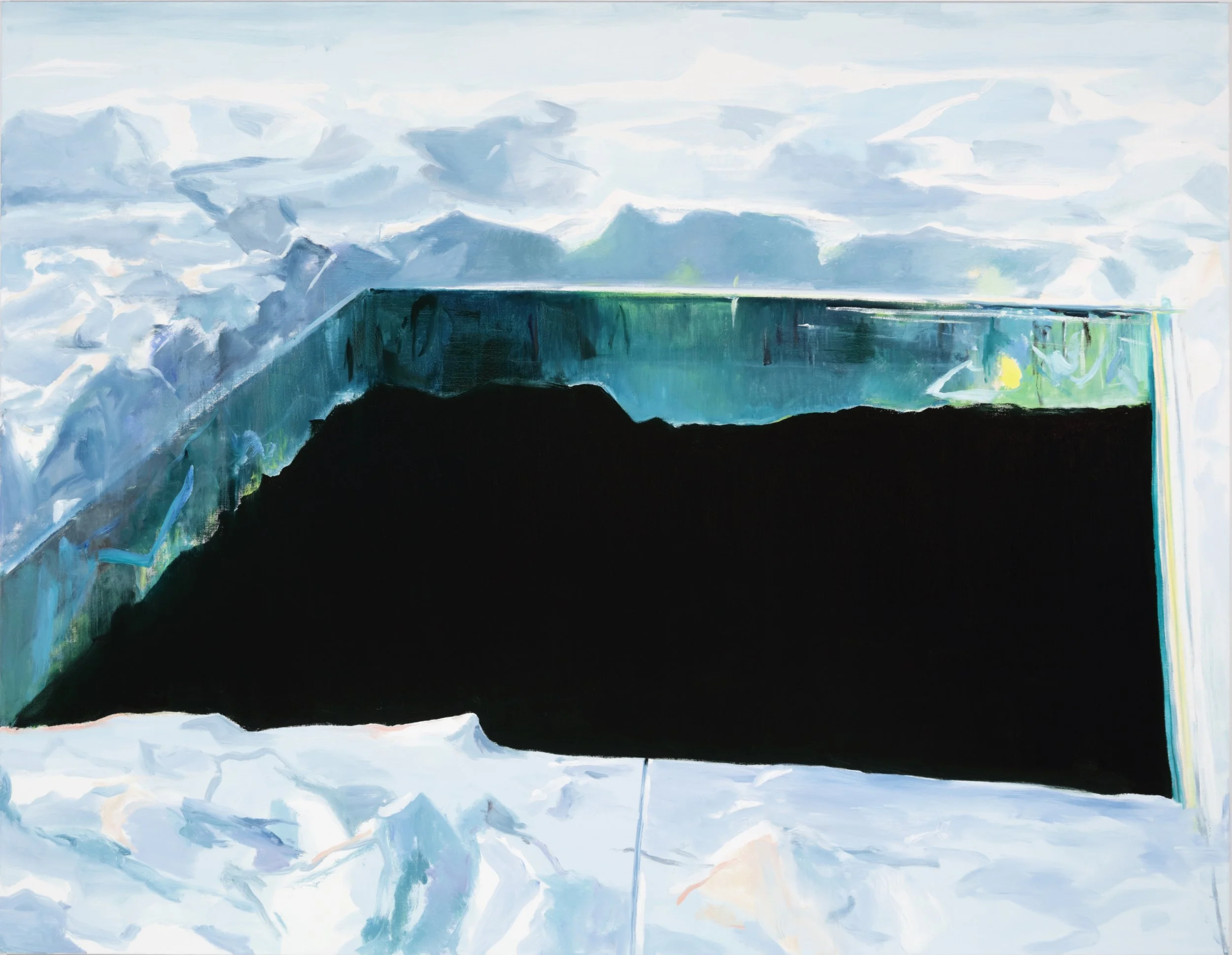

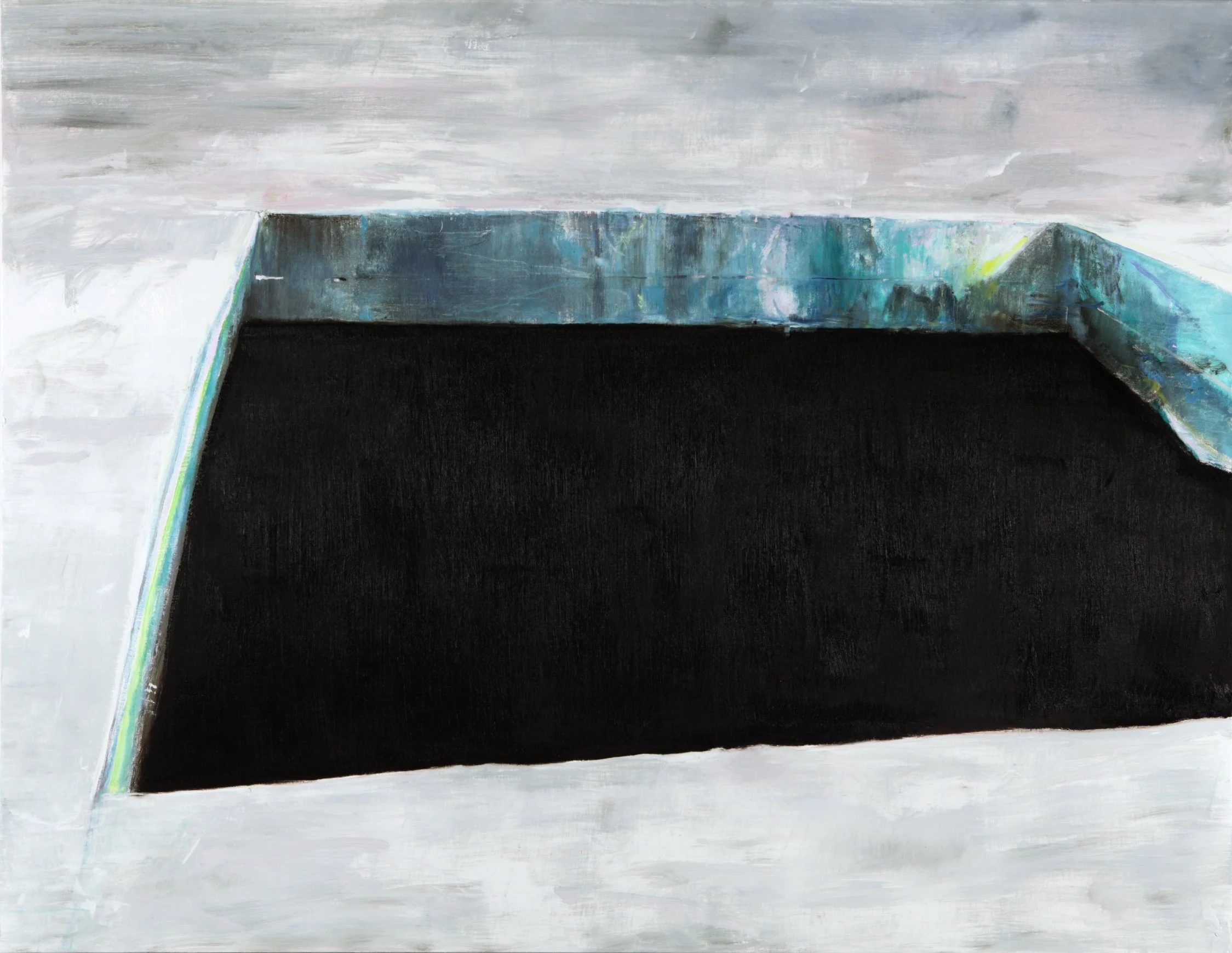
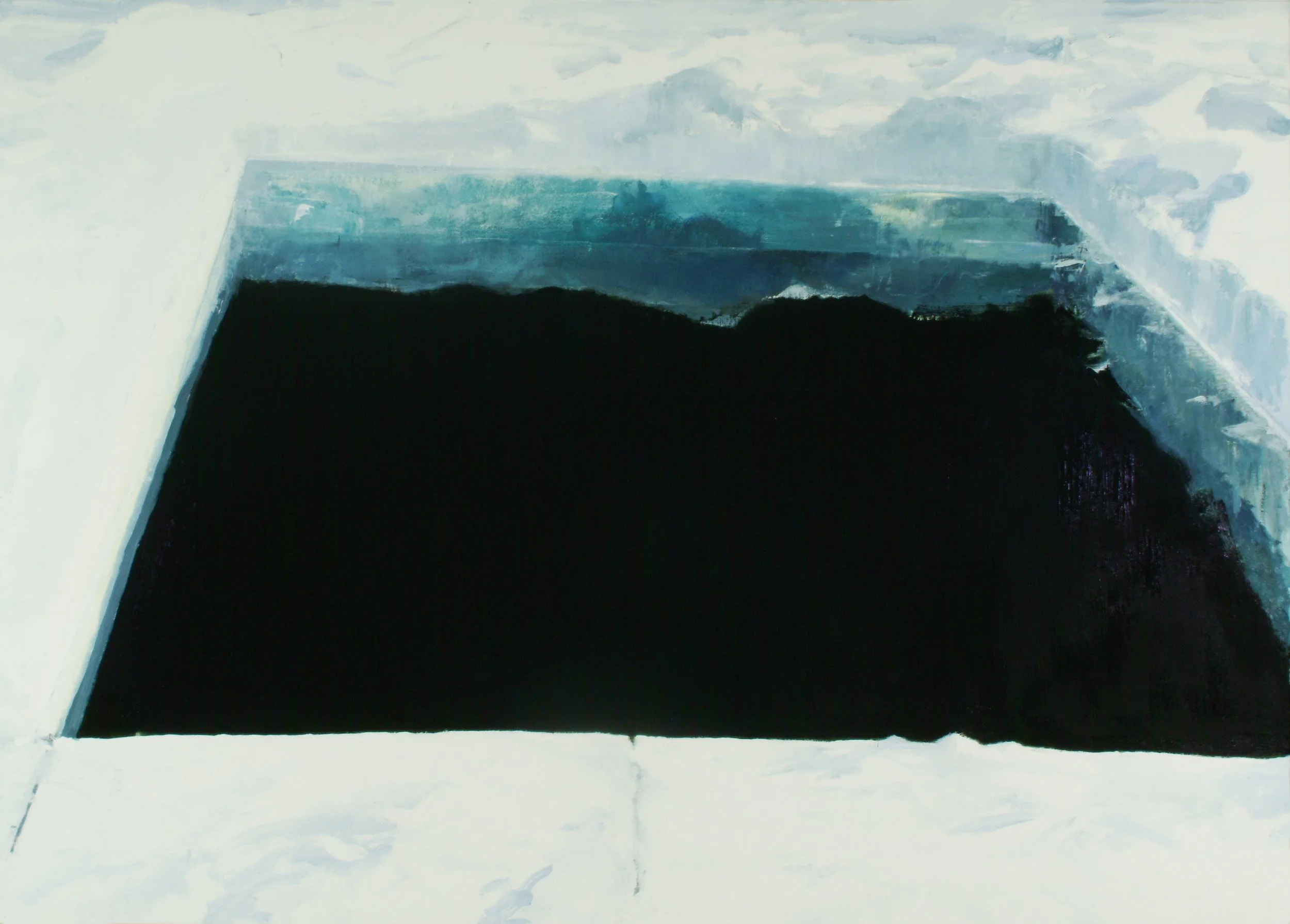
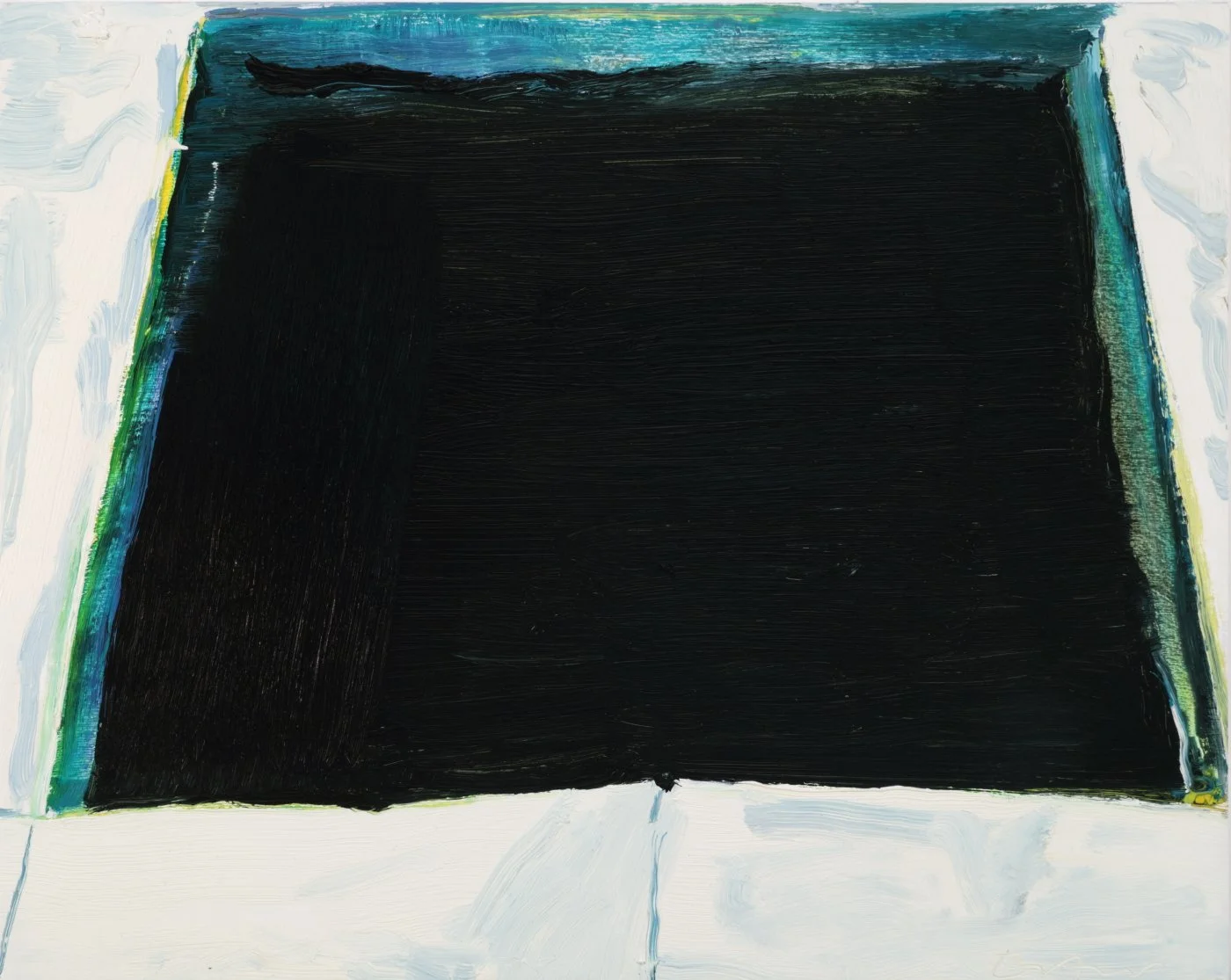
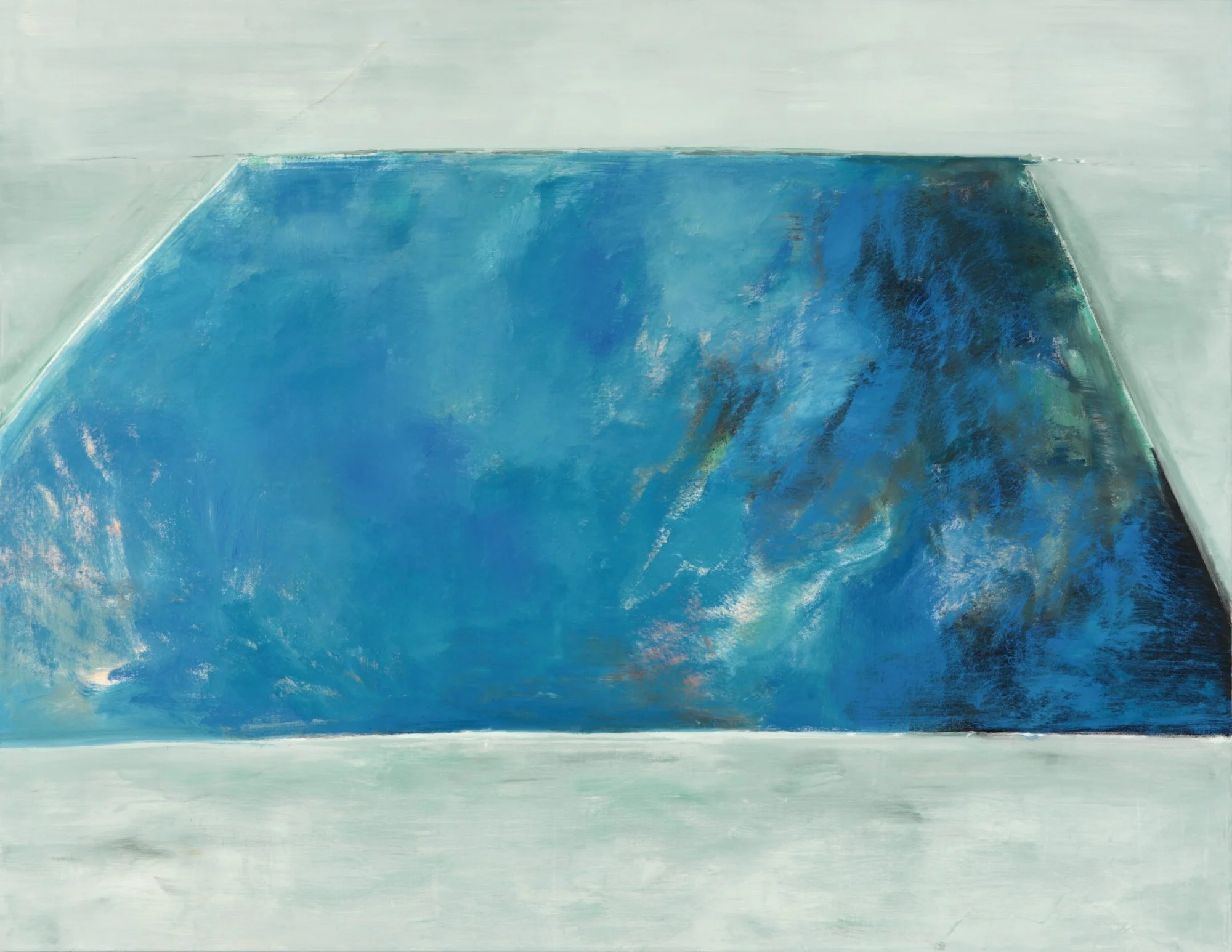
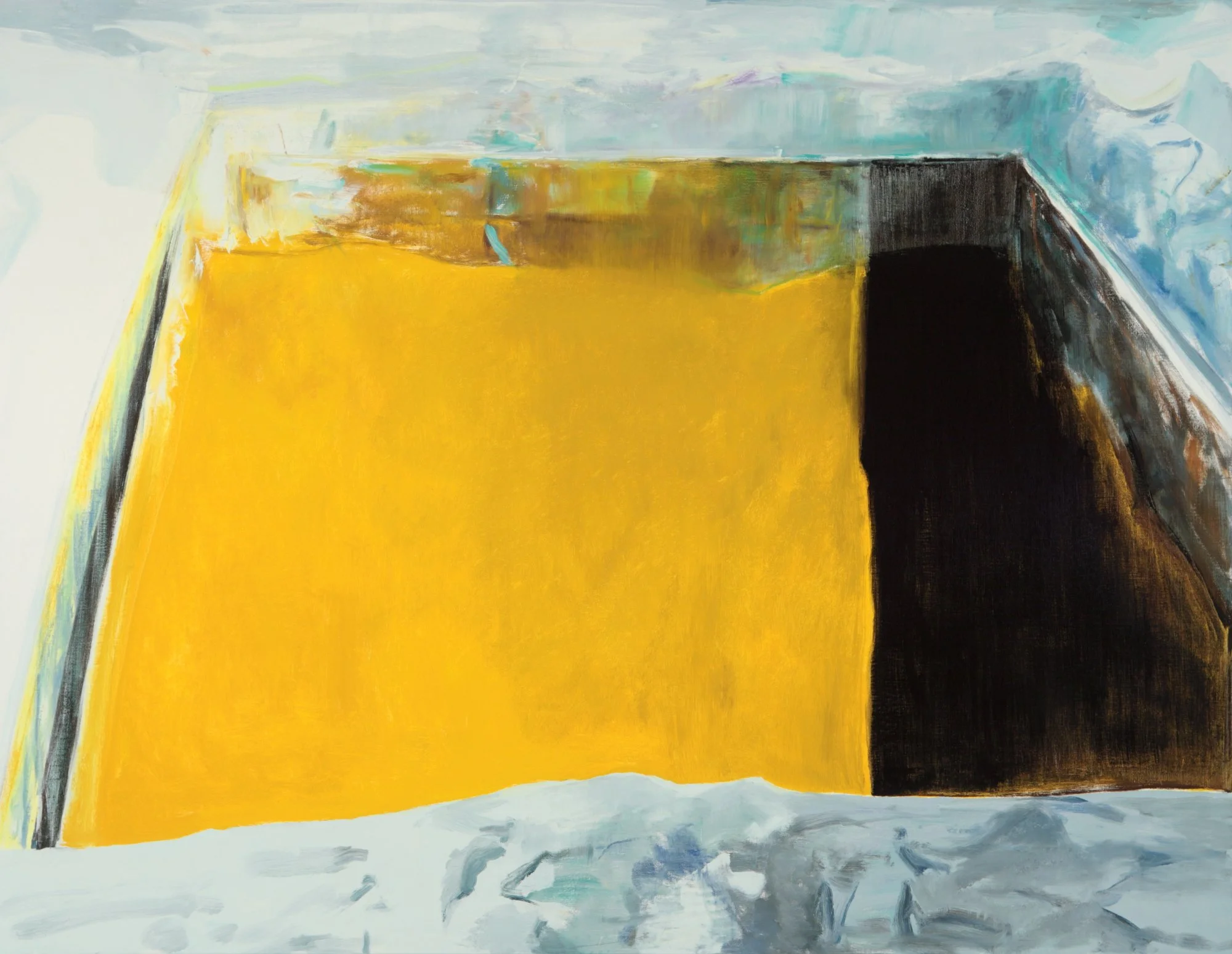
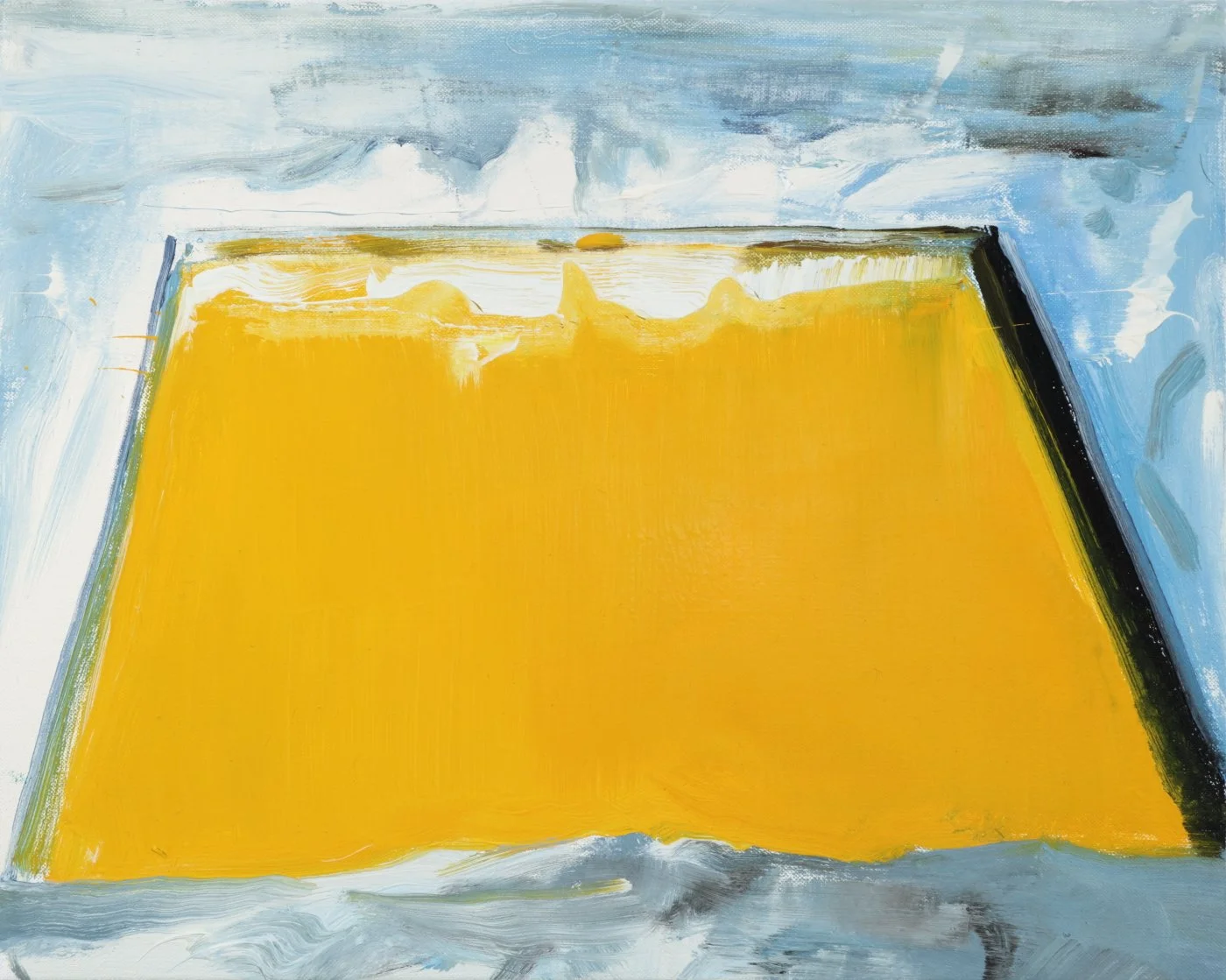
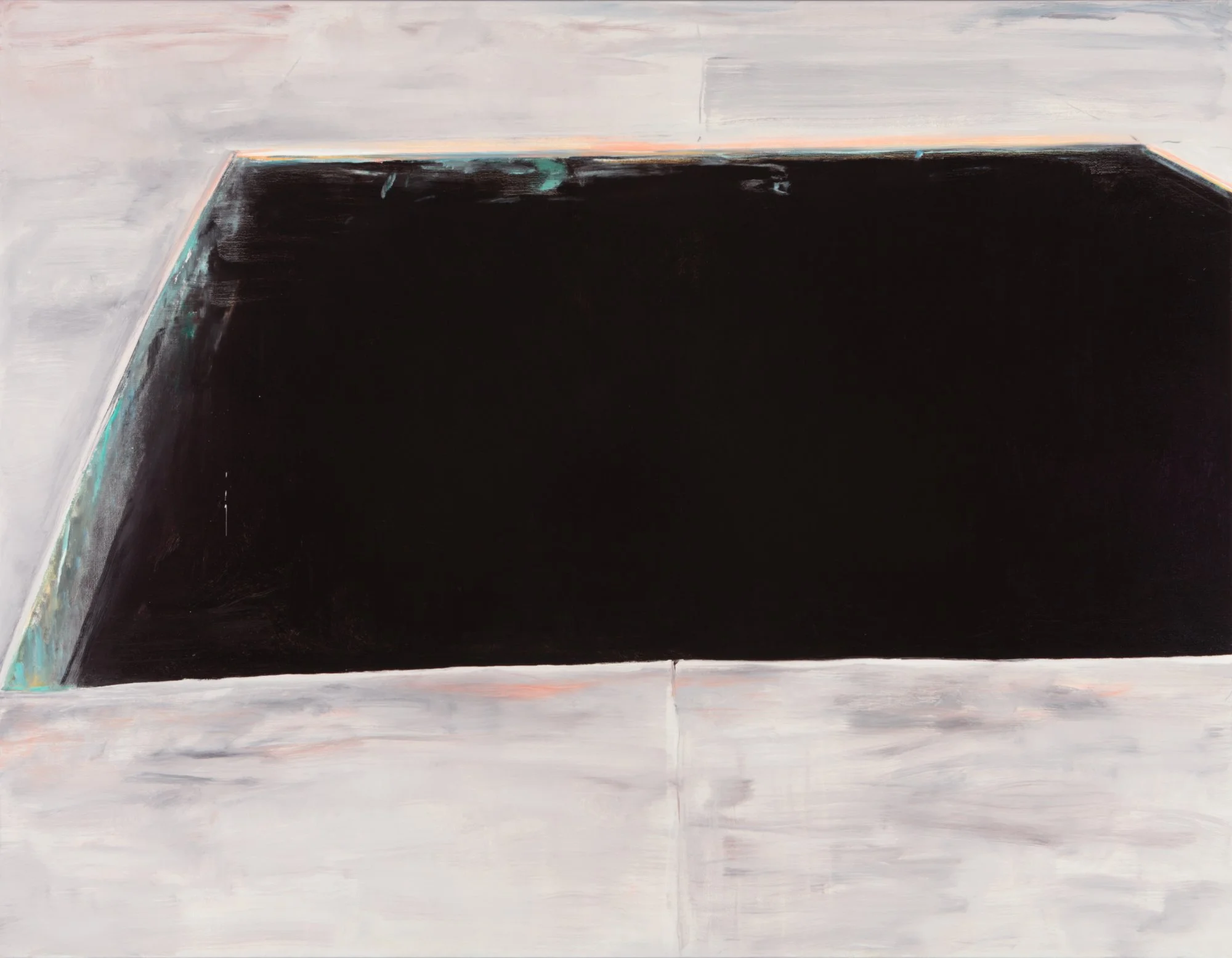
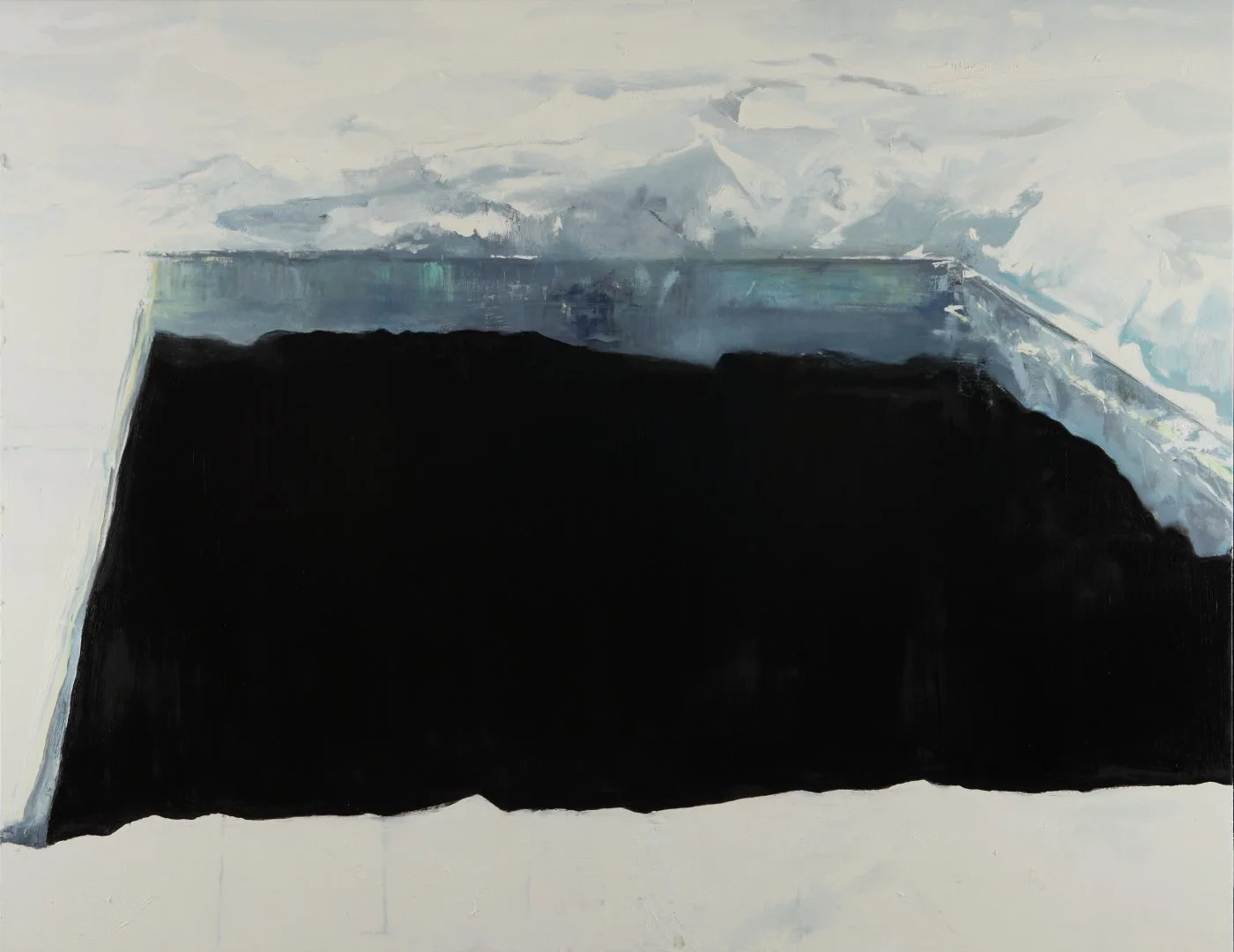
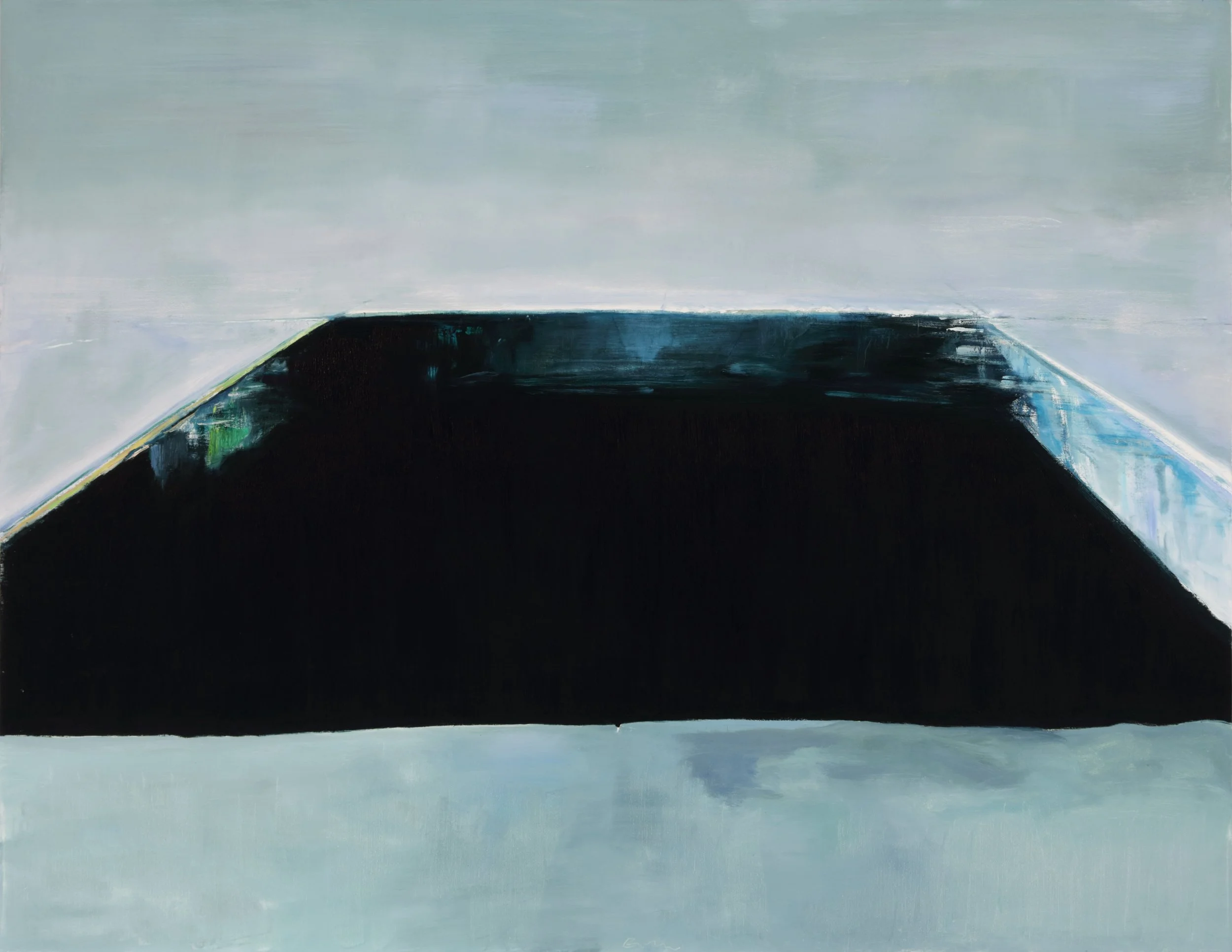
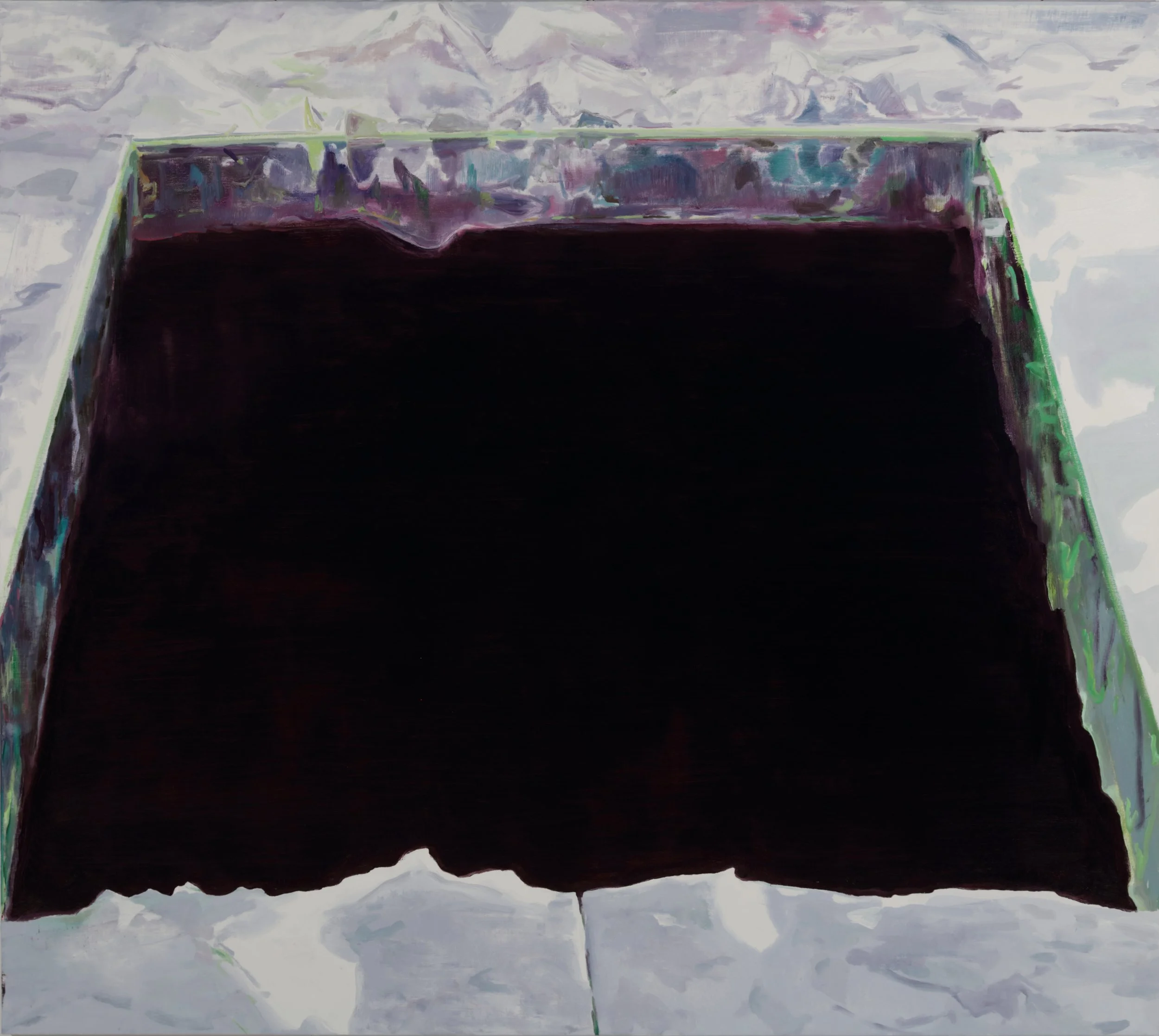
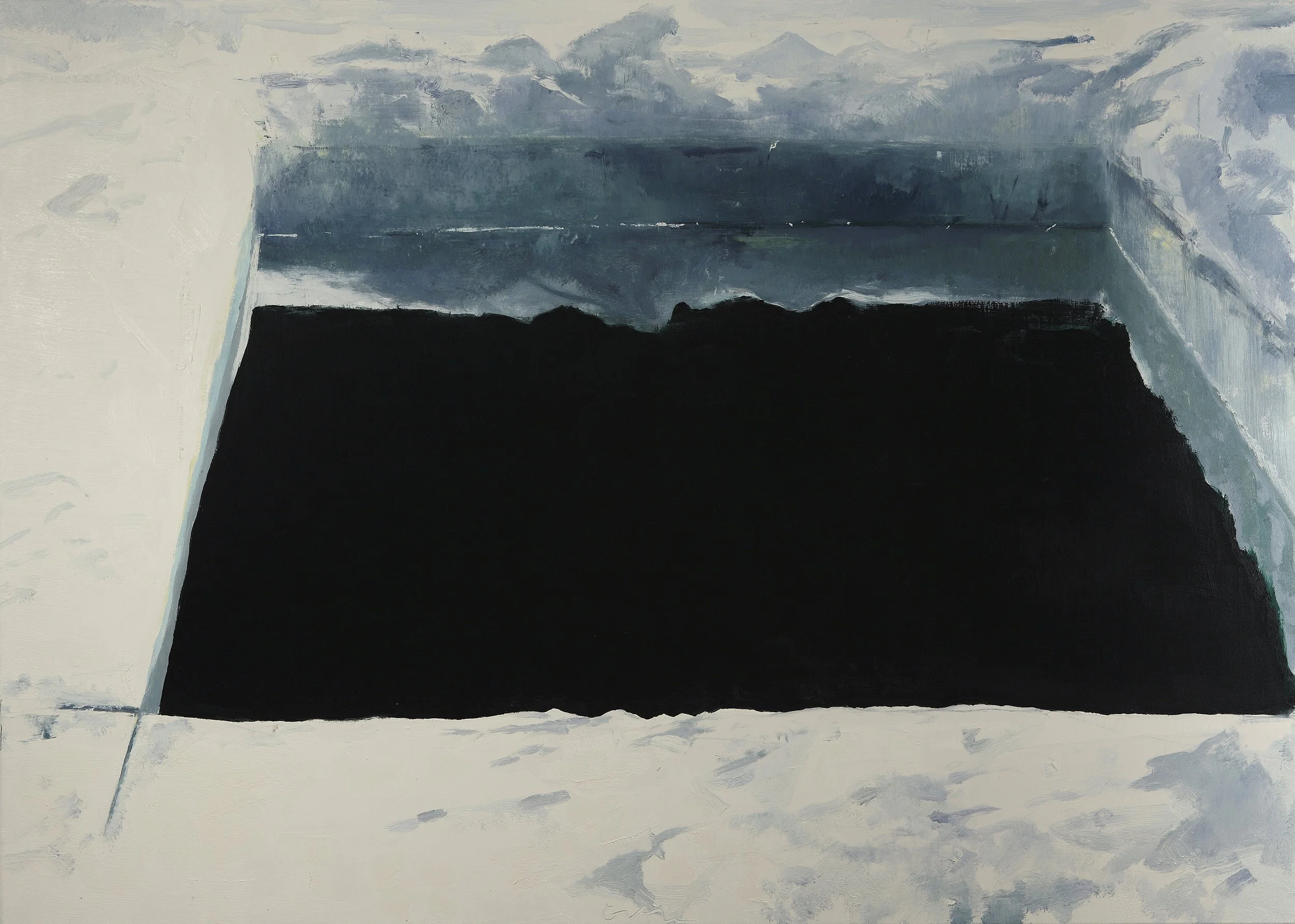
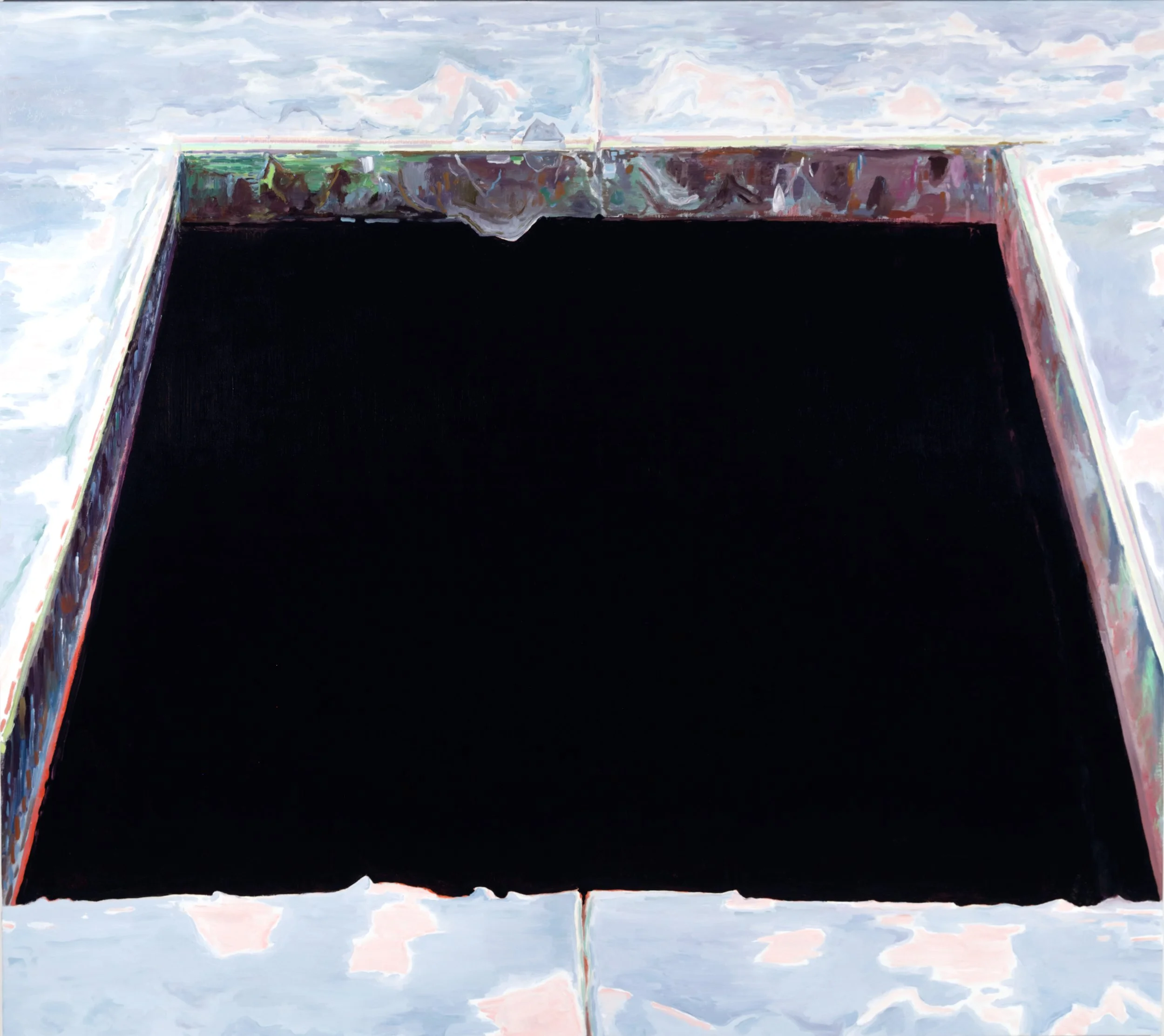
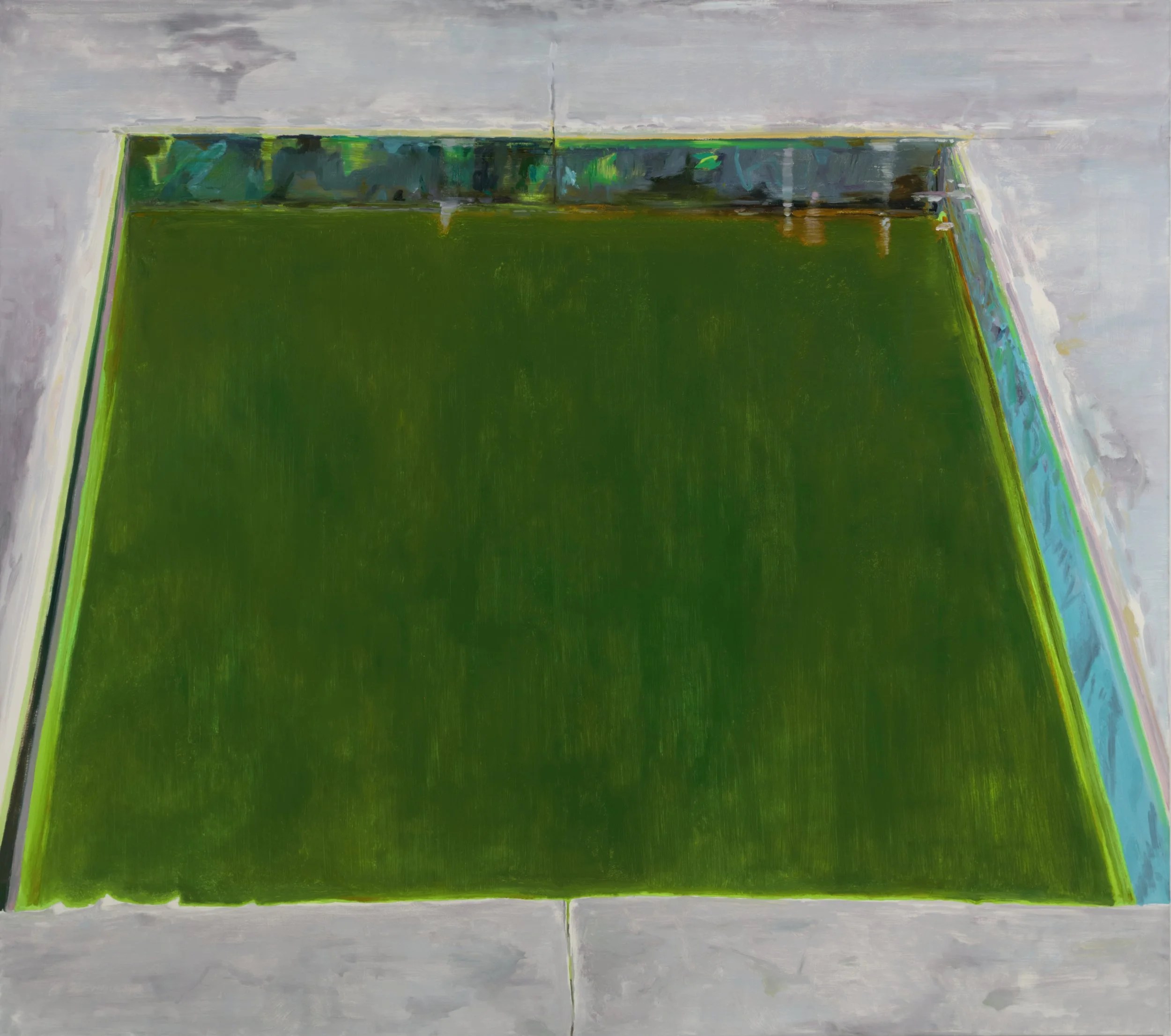
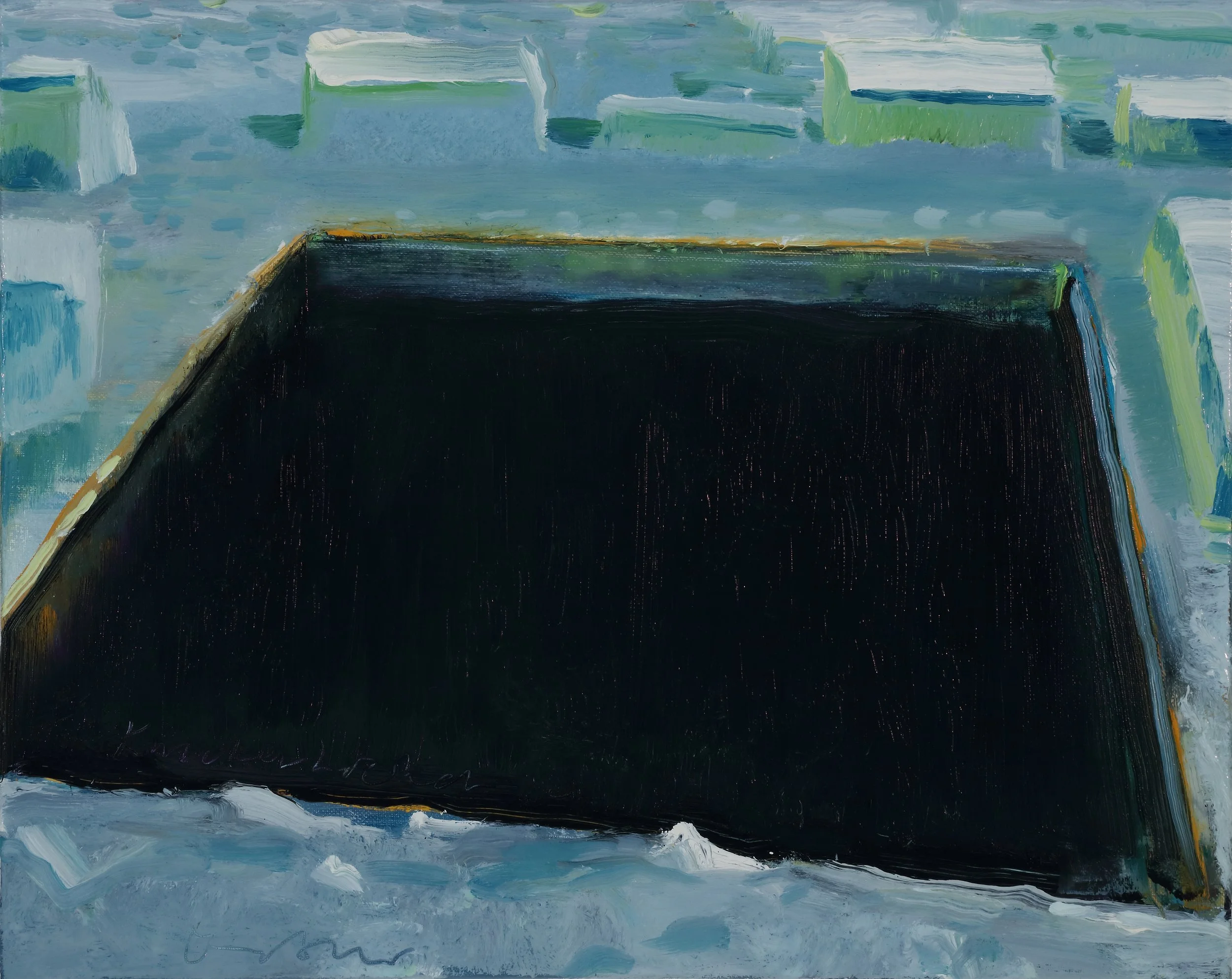
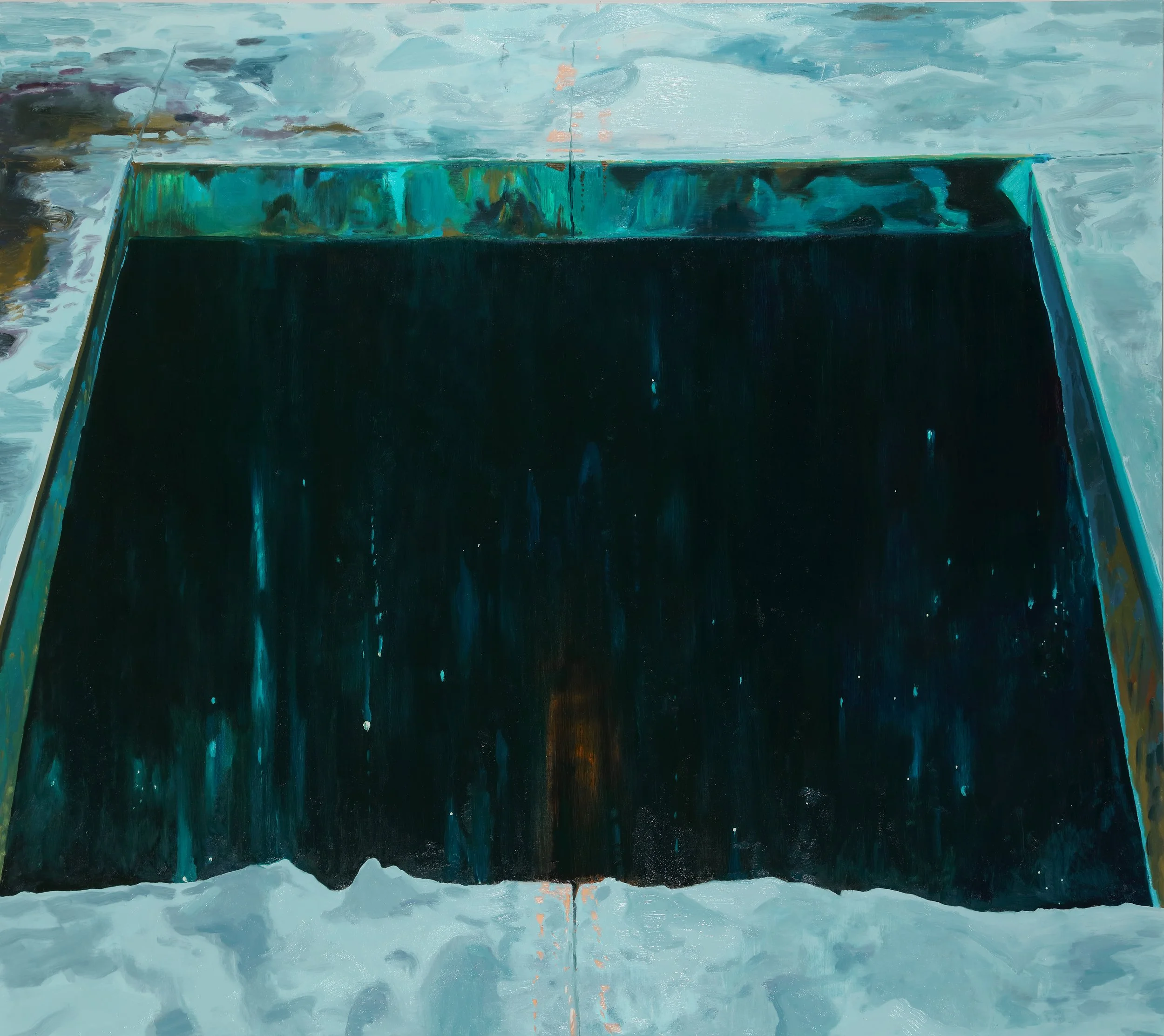
My on-going series Ice Cuts (2008–present) began with a hole cut into the ice in front of a Finnish sauna, an aspect of Finnish culture that my family has maintained to this day. Intended for an icy immersion following the heat of the sauna, the avanto, as it is called in Finnish, underscores and personalizes the inherent contrasts in nature.
Although painted in the studio, the dark hues of the focal shape and the qualities of light and reflection at its edges represent conditions as recalled from direct observation. Each winter, over ten years, I made a single new version. The central trapezoid remained fixed; I did not. These icy incisions translate as autobiographical elements and have helped me extract my father’s childhood memories of New England ice harvests. Time and change emerged as variables in the narrative, planned to correspond with the timeline of the Great Depression—Ice Cut (1929), Ice Cut (1933), culminating in Ice Cut (1939). The dark chromatic shape itself evinces the forgotten 19th century global ice trade.
More so today than at the outset of the project, human intervention in the ice-cover of a lake or river represents a multitude of concerns, the global climate crisis chief among them. Ice forms a veneer. To puncture this cold skin, as fragile as its corresponding human layer, exposes vulnerabilities personal and planetary.
In 1936, art historian Alfred Barr said, “Each generation must paint its own black square,” which resonated with me. As I reckoned with what I call “my own personal sort of Modernism” in the exchange of abstraction and realism, the Ice Cuts grafted onto a painterly lineage extending from Courbet and Malevich to Agnes Martin and Ellsworth Kelly. These apertures in the ice may be, as some have suggested, entrances to oblivion, but they also mediate—within the frame of a painted experience—the tension and sensation present in our relationship to the physical world.
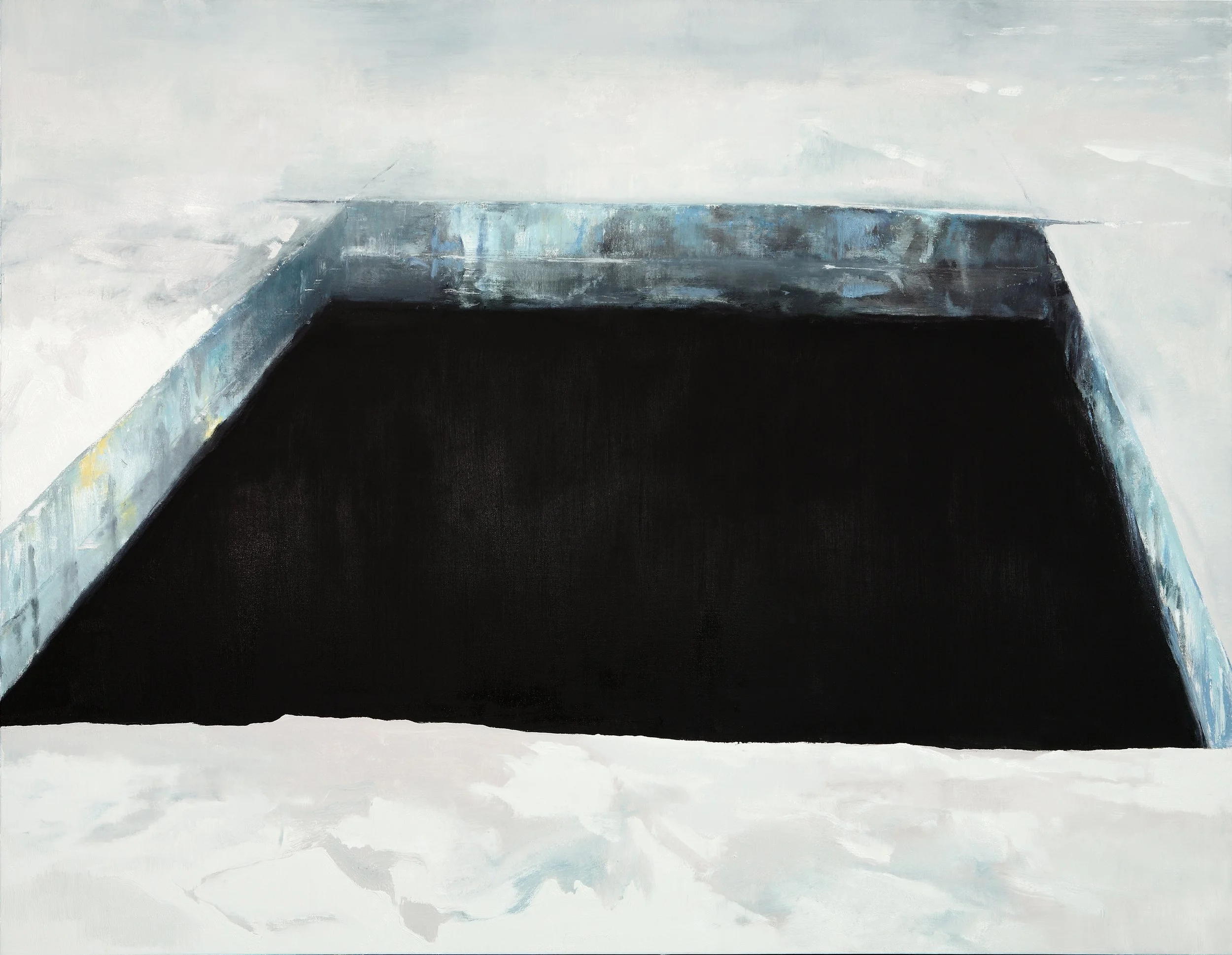
"Ice Cut (1932)," 2010, oil on linen, 62 x 80 inches. Hood Museum of Art, Dartmouth: Purchased through the Virginia and Preston T. Kelsey 1958 Fund and the Contemporary Art Fund; 2015.24.1
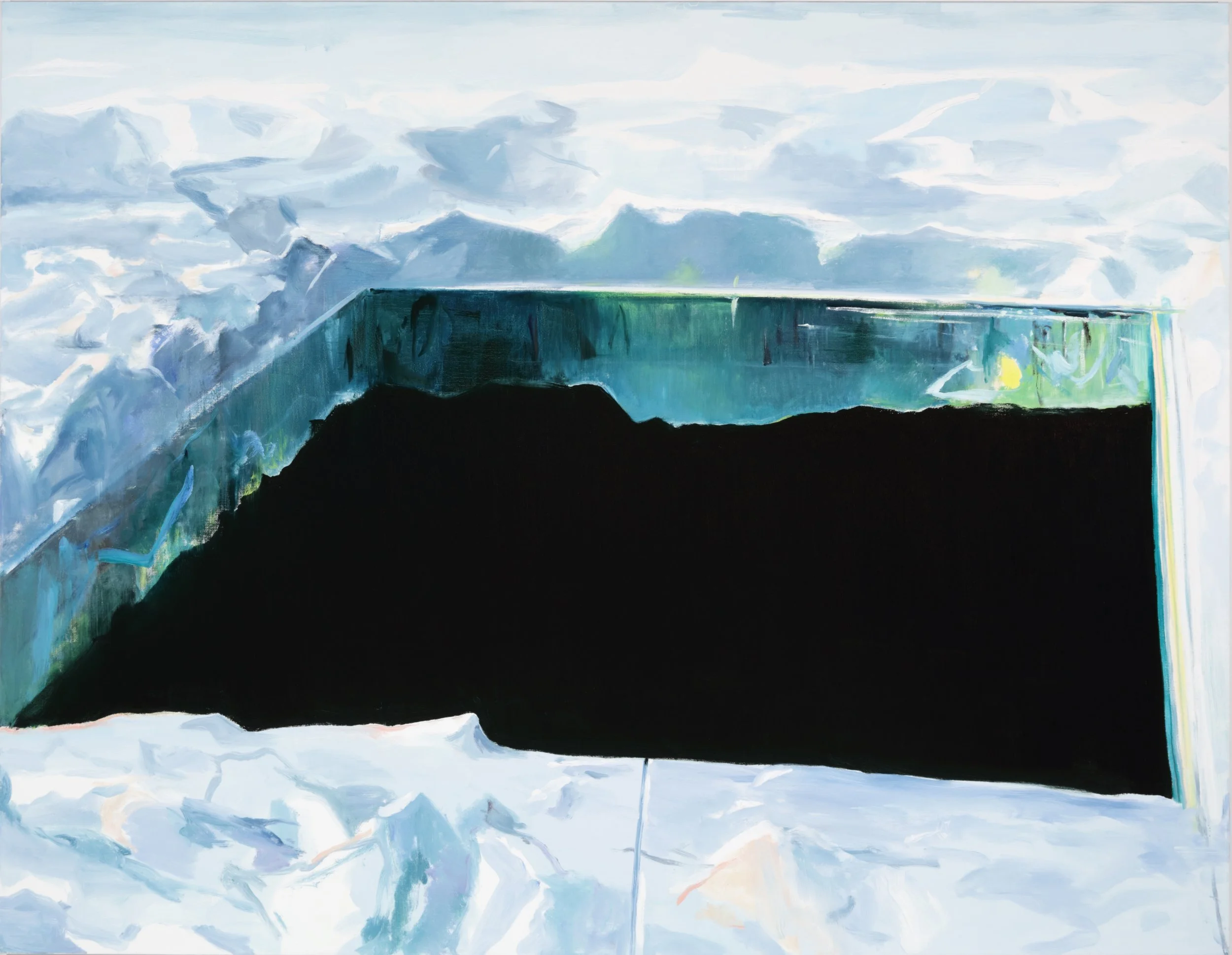
"Ice Cut (1937)," oil on linen, 2008, 50 x 70 inches. Private Collection.
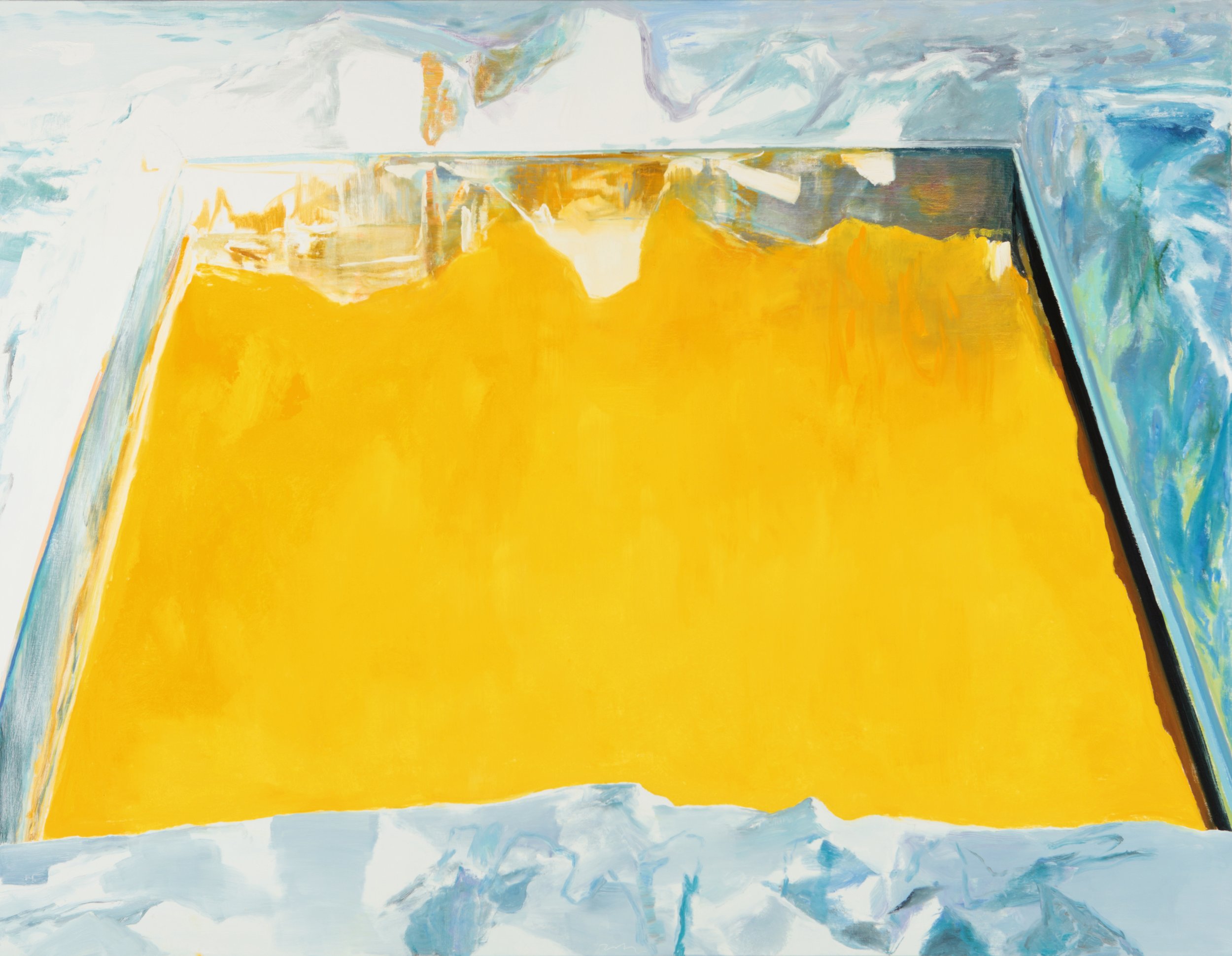
An aerial view of a body of water with a rocky shoreline, under a cloudy sky.
Ice Cuts in Museum + Public Collections
Related Publication
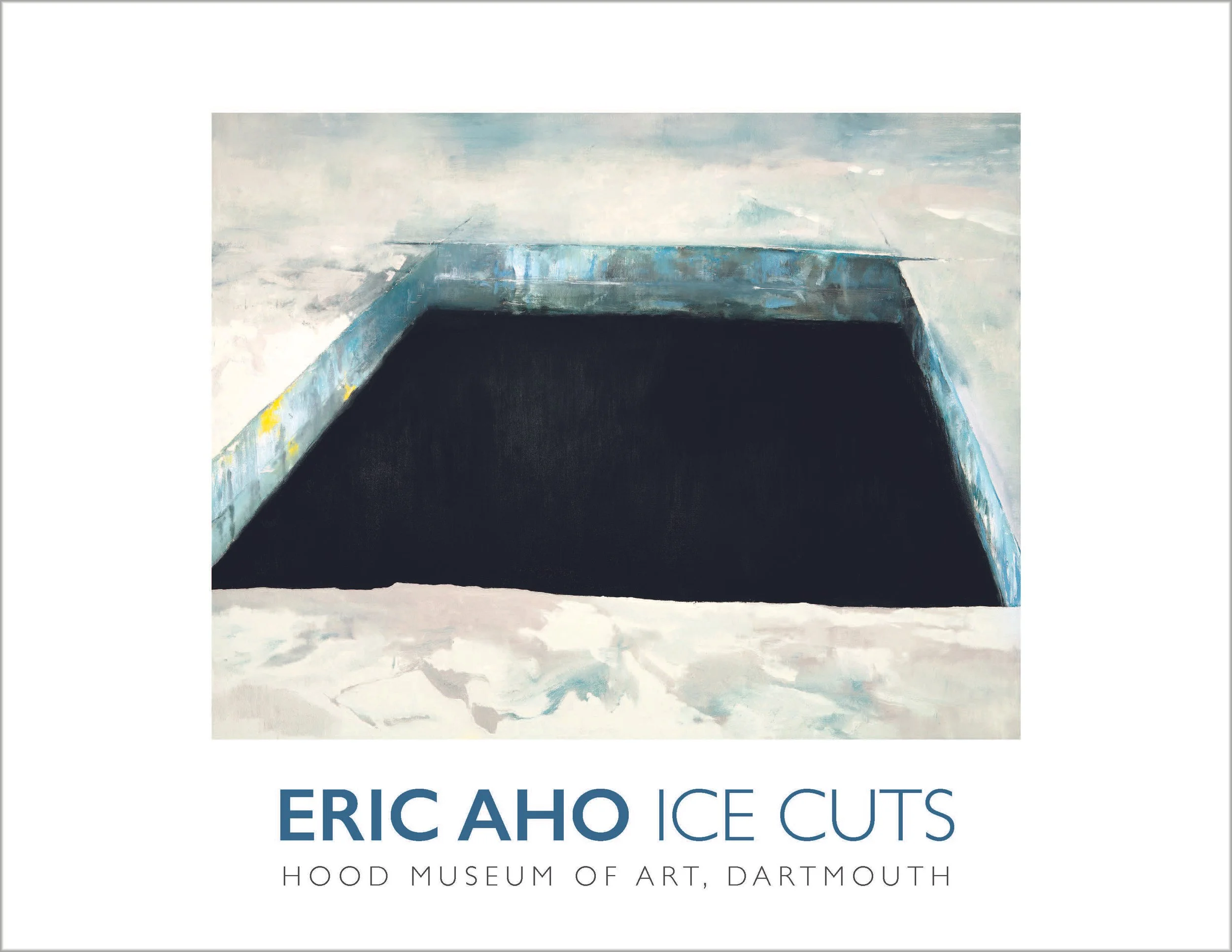
Eric Aho: Ice Cuts
24-page softcover catalogue with color reproductions, essay by Katherine Hart and interview with Eric Aho.
Hood Museum of Art, Dartmouth College
Related Review
Boston Globe, January 16, 2016, “New England artist Aho breaks ice with new body of work”
Related Exhibition
Eric Aho: Ice Cuts
Hood Museum of Art, Dartmouth College
January 9–March 13, 2016
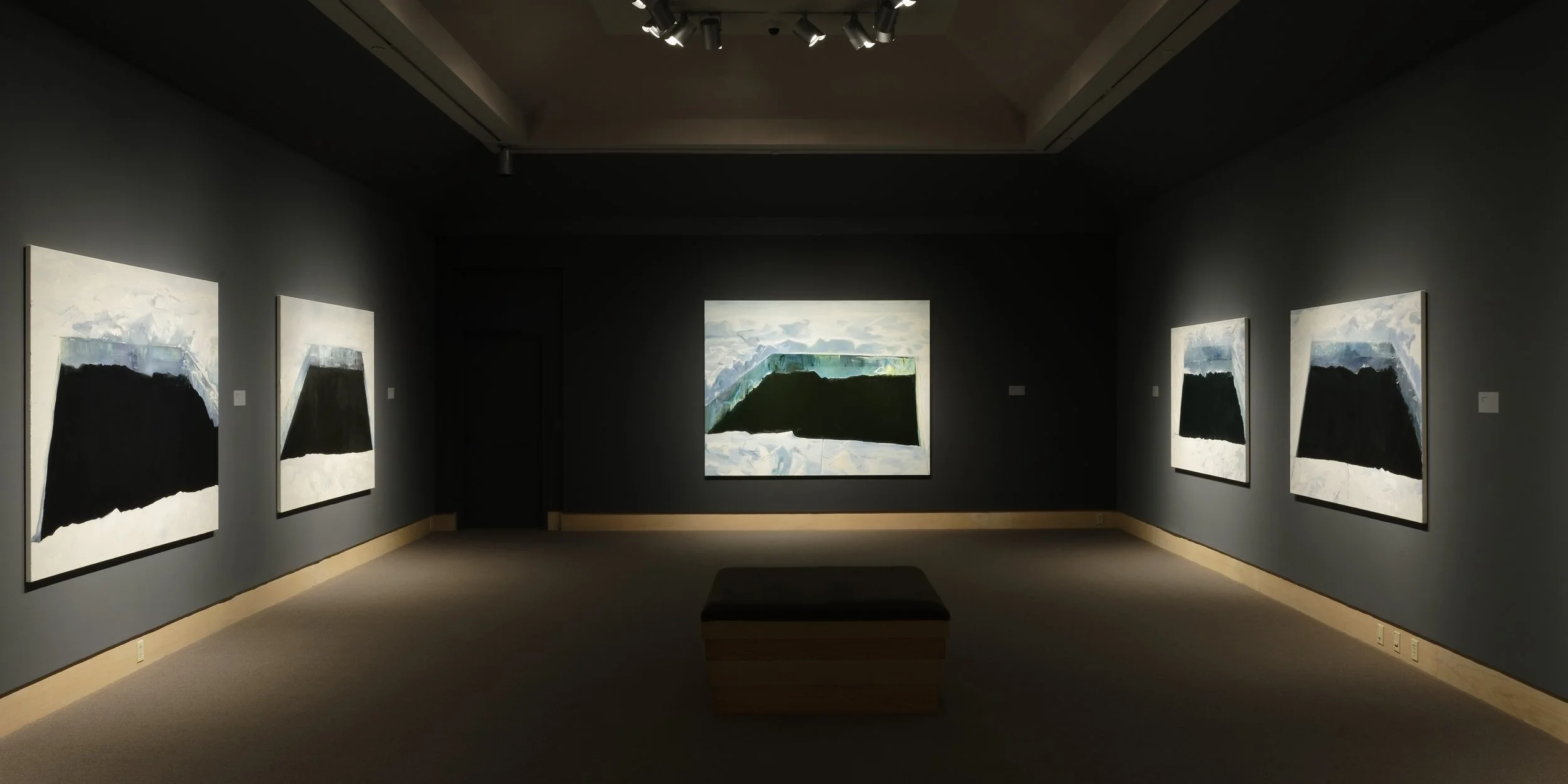
"Eric Aho: Ice Cuts" at the Hood Museum of Art, Dartmouth. Photo by Jeffrey Nintzel.
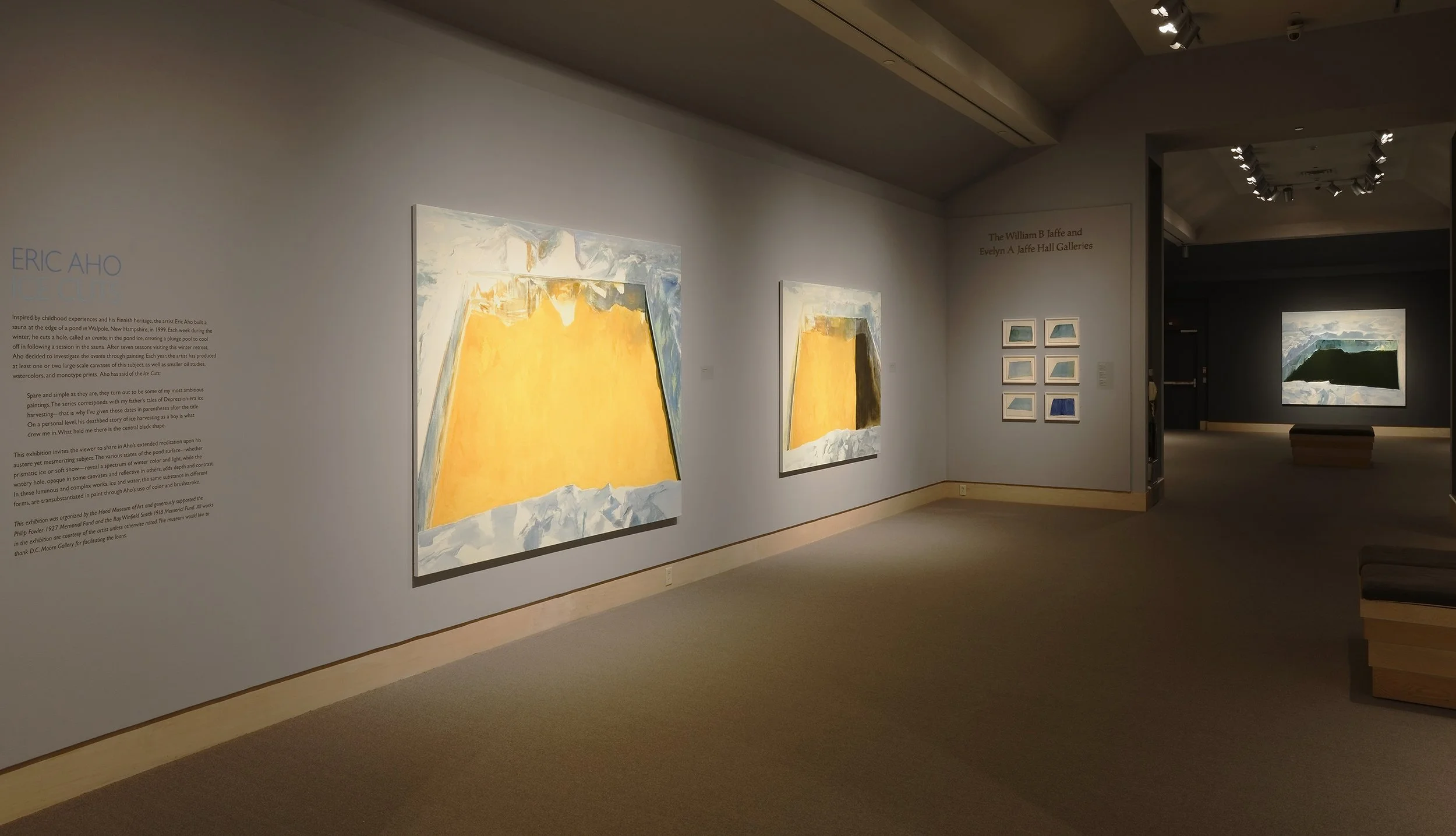
"Eric Aho: Ice Cuts" at the Hood Museum of Art, Dartmouth. Photo by Jeffrey Nintzel.
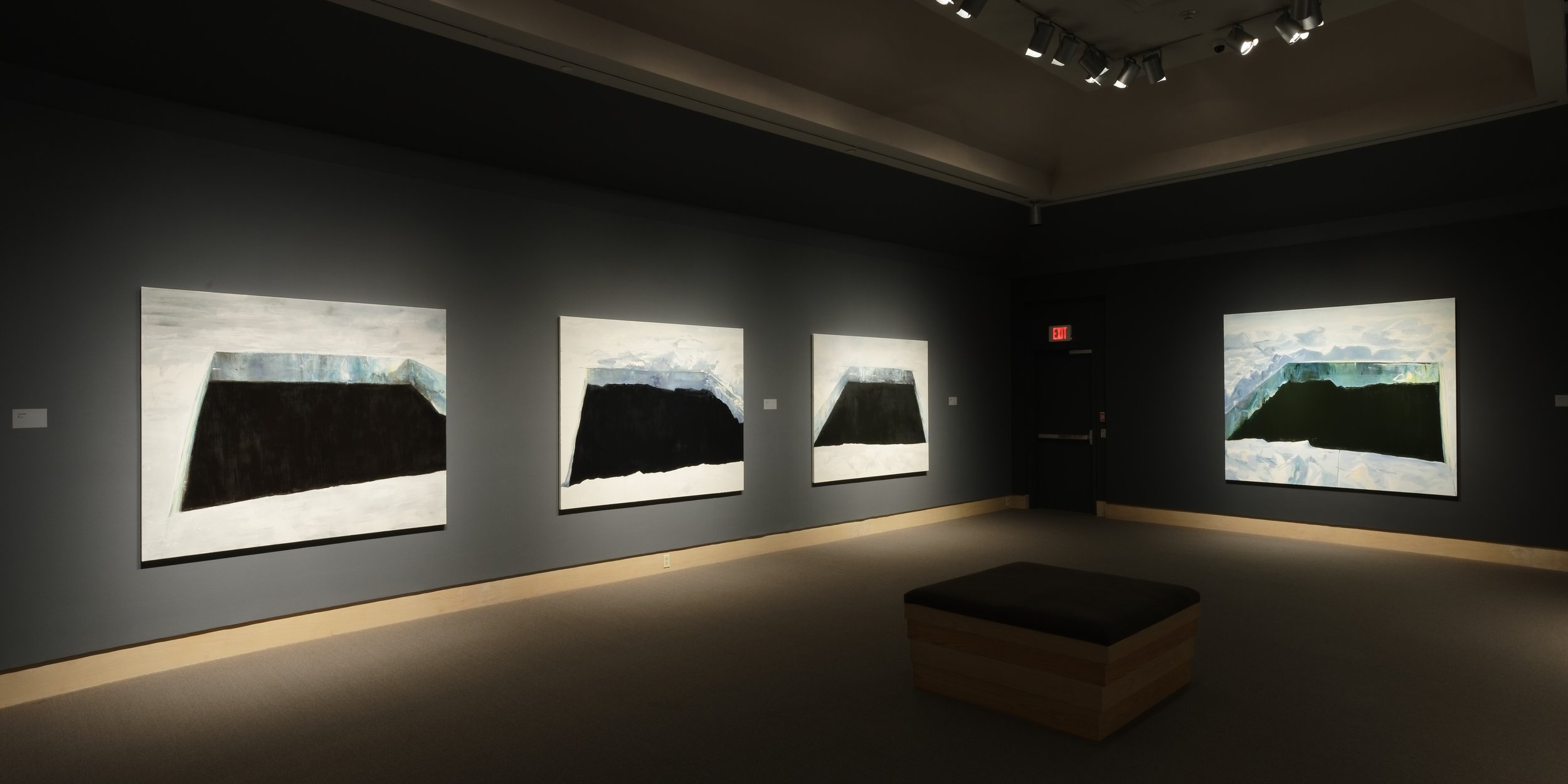
"Eric Aho: Ice Cuts" at the Hood Museum of Art, Dartmouth. Photo by Jeffrey Nintzel.
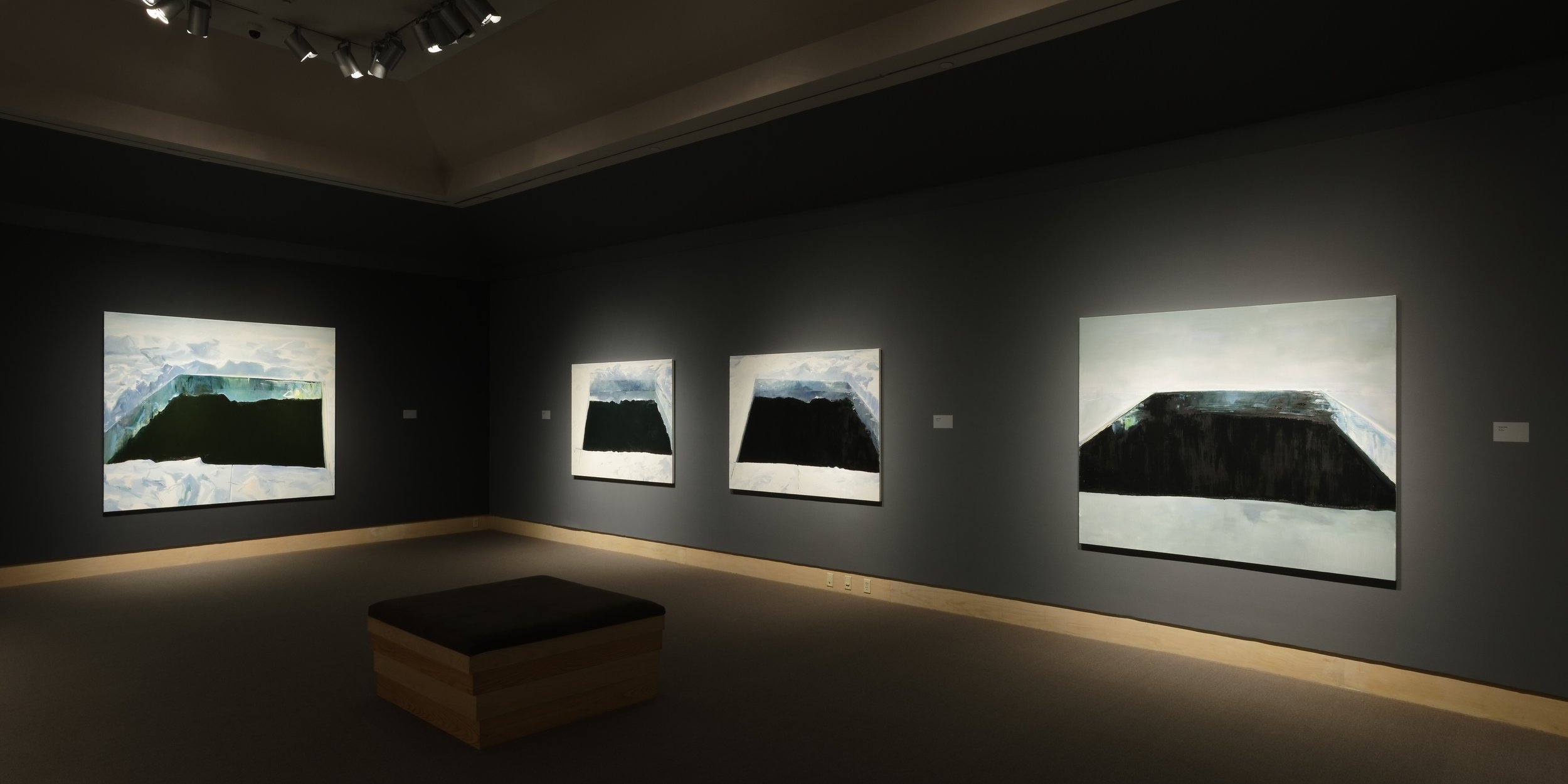
"Eric Aho: Ice Cuts" at the Hood Museum of Art, Dartmouth. Photo by Jeffrey Nintzel.
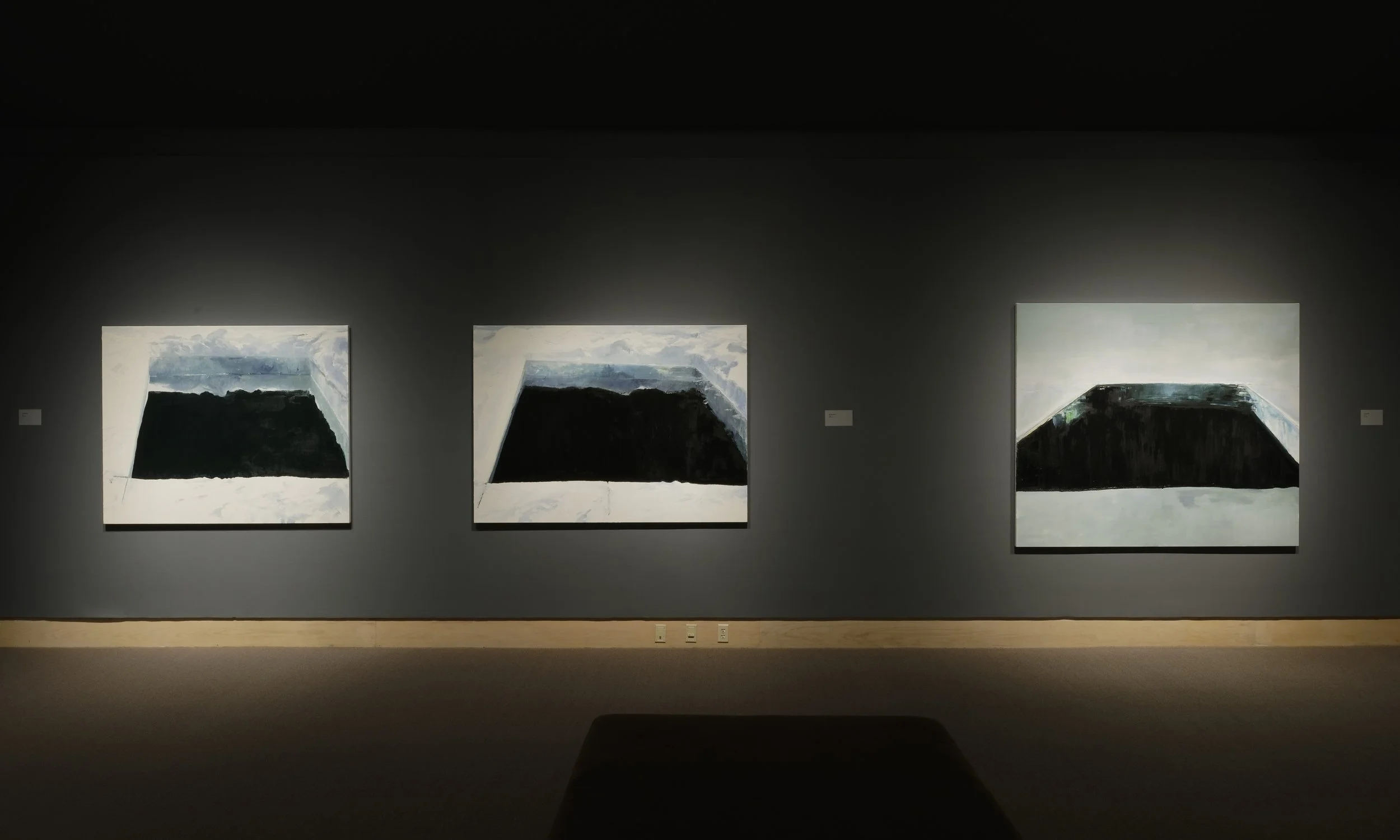
"Eric Aho: Ice Cuts" at the Hood Museum of Art, Dartmouth. Photo by Jeffrey Nintzel.
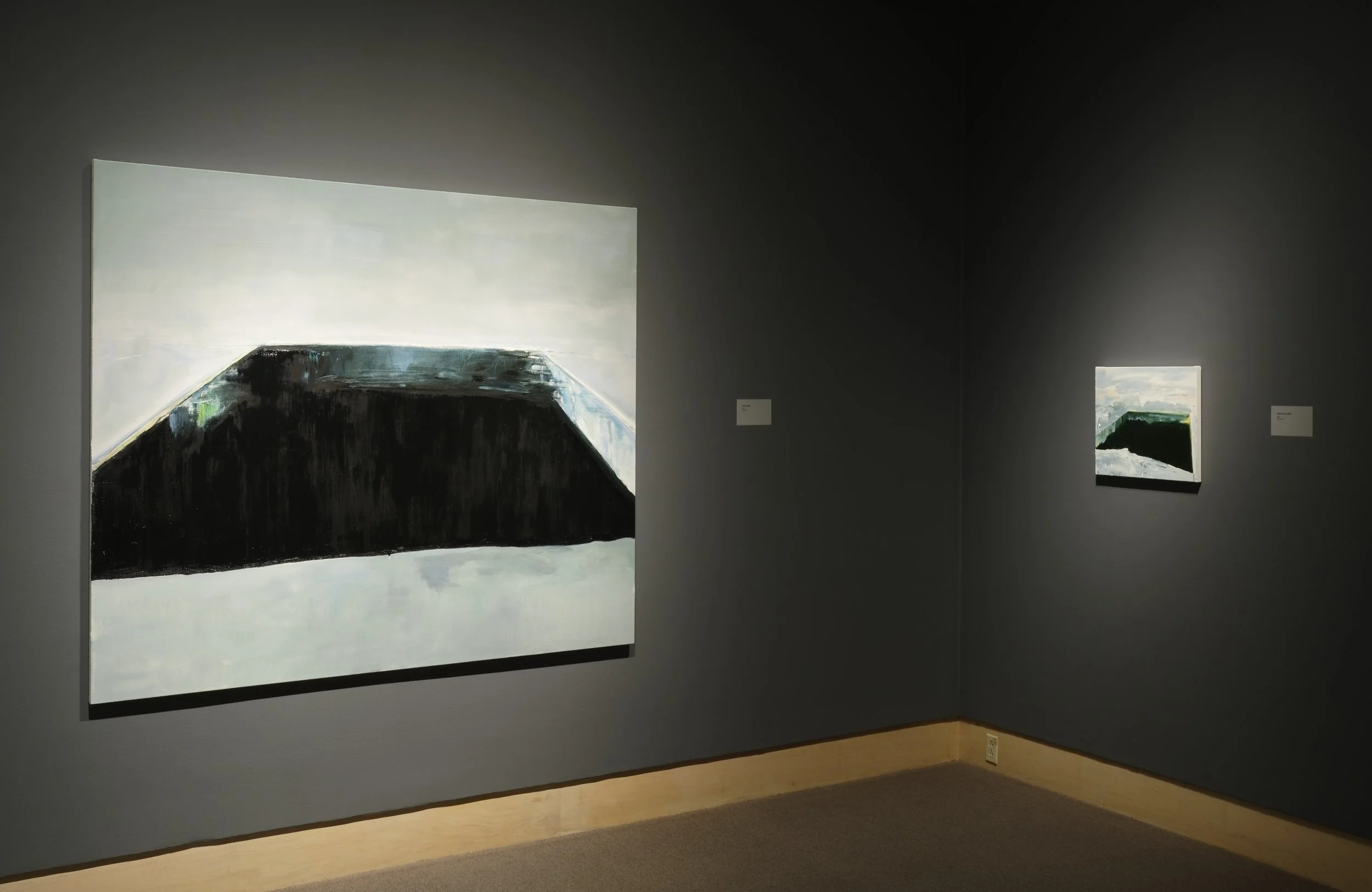
"Eric Aho: Ice Cuts" at the Hood Museum of Art, Dartmouth. Photo by Jeffrey Nintzel.
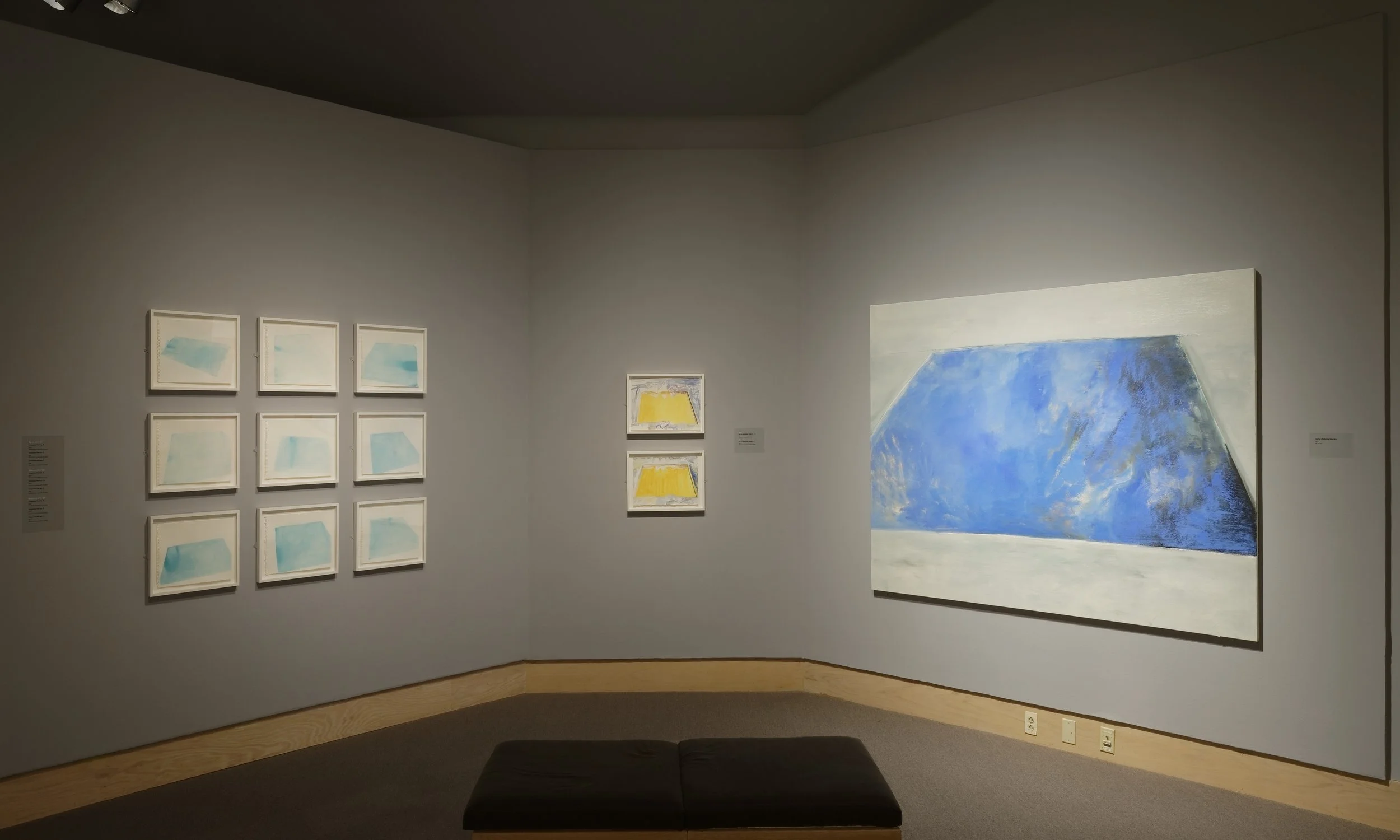
"Eric Aho: Ice Cuts" at the Hood Museum of Art, Dartmouth. Photo by Jeffrey Nintzel.
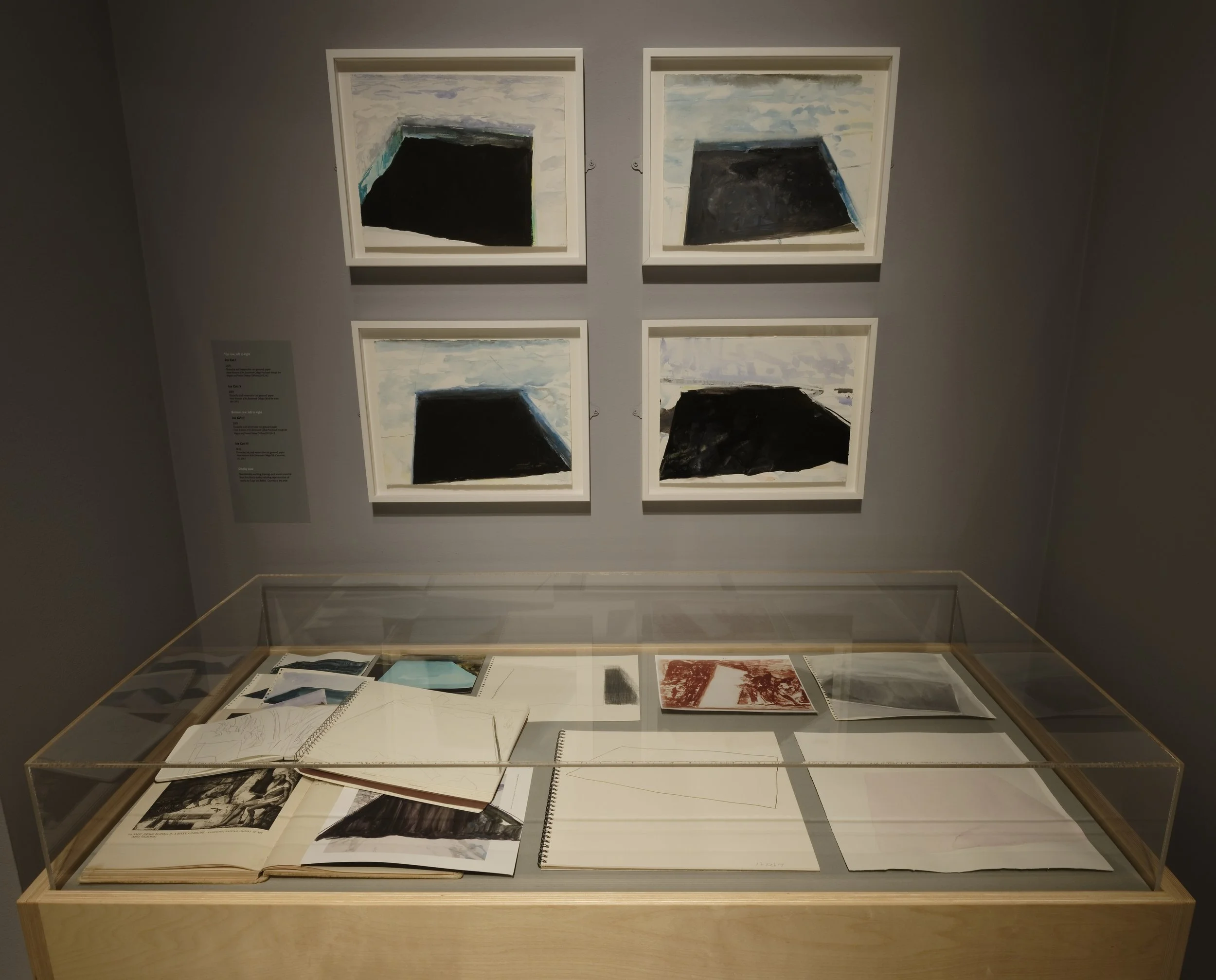
"Eric Aho: Ice Cuts" at the Hood Museum of Art, Dartmouth. Photo by Jeffrey Nintzel.
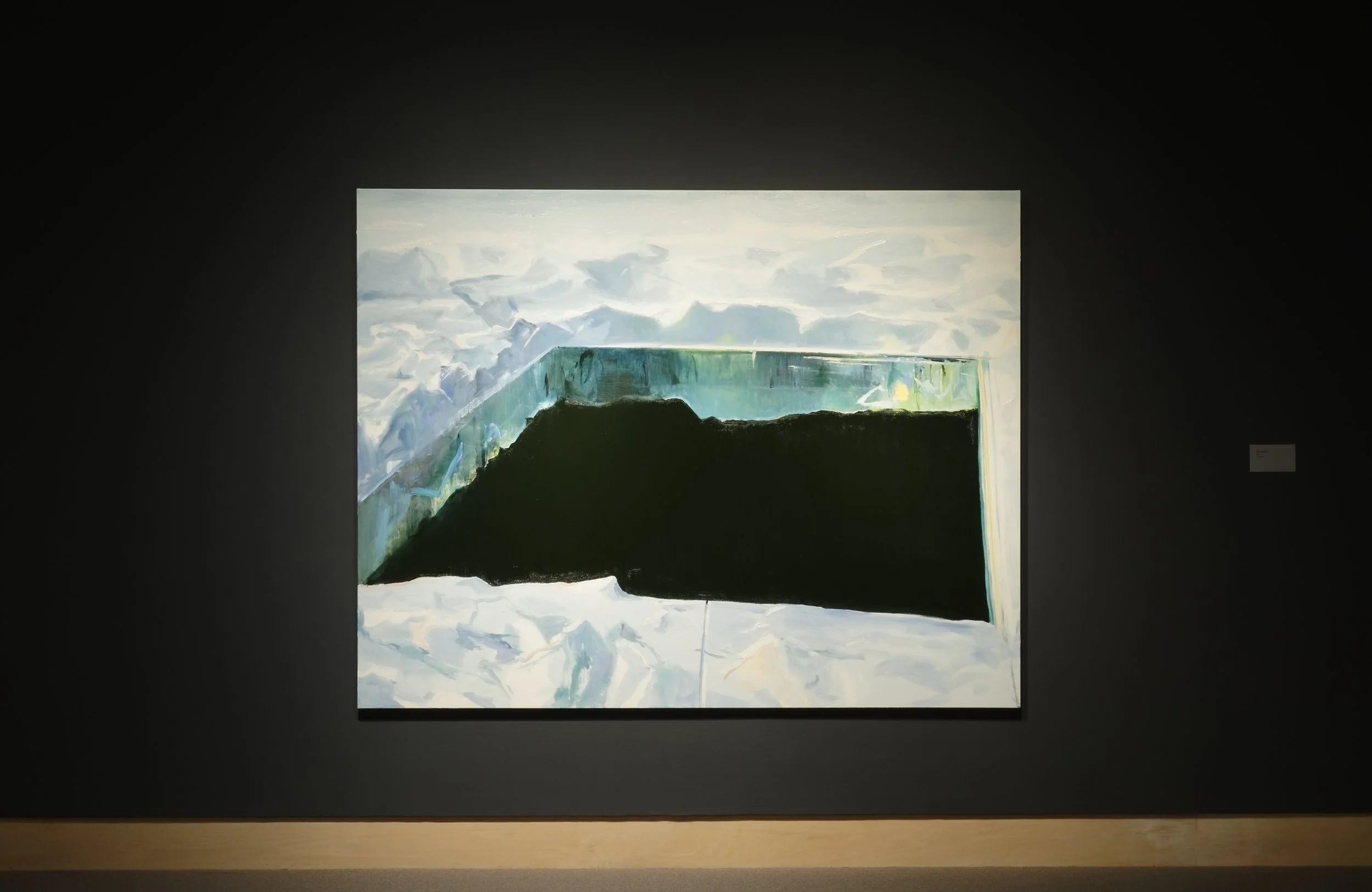
"Eric Aho: Ice Cuts" at the Hood Museum of Art, Dartmouth. Photo by Jeffrey Nintzel.
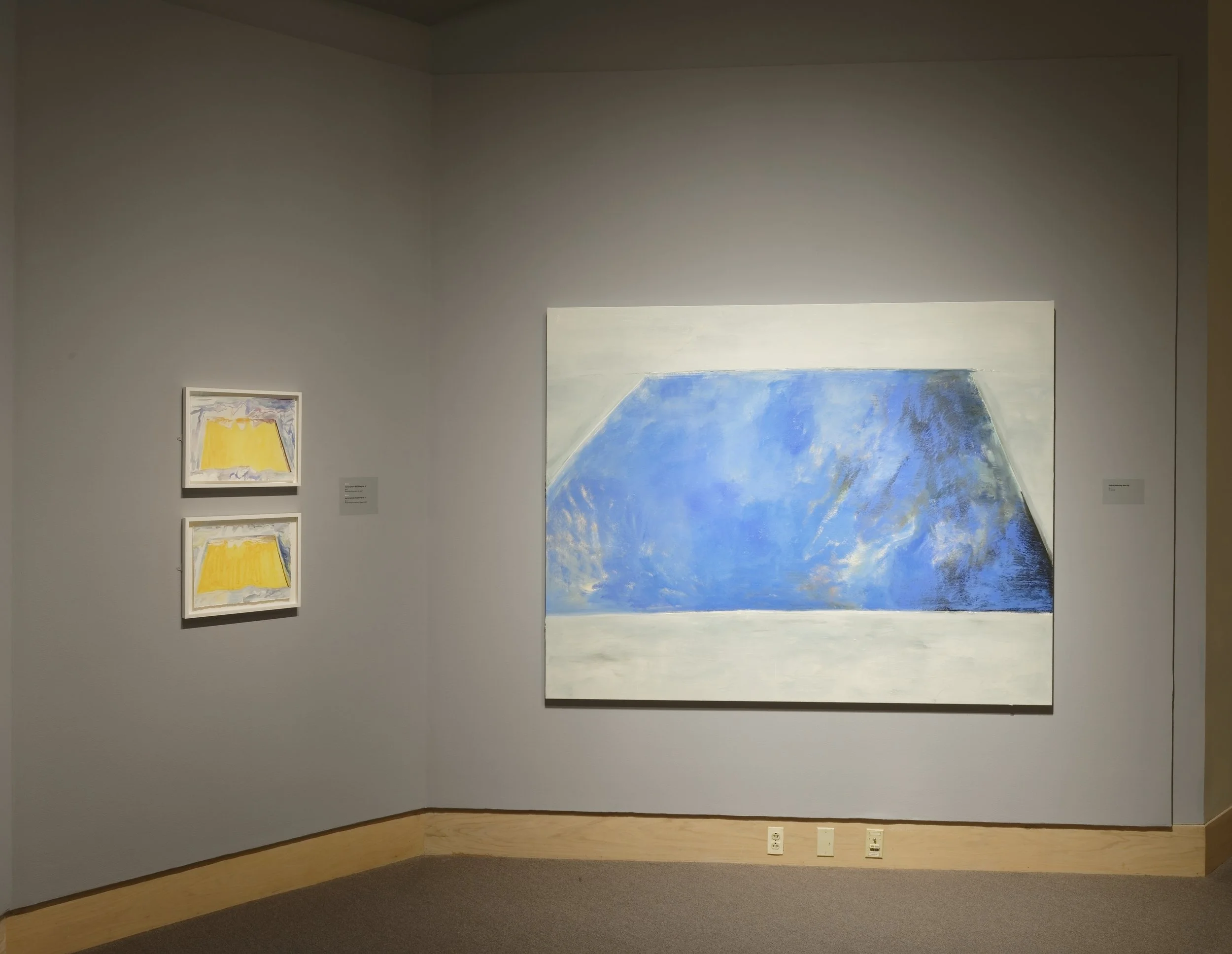
"Eric Aho: Ice Cuts" at the Hood Museum of Art, Dartmouth. Photo by Jeffrey Nintzel.